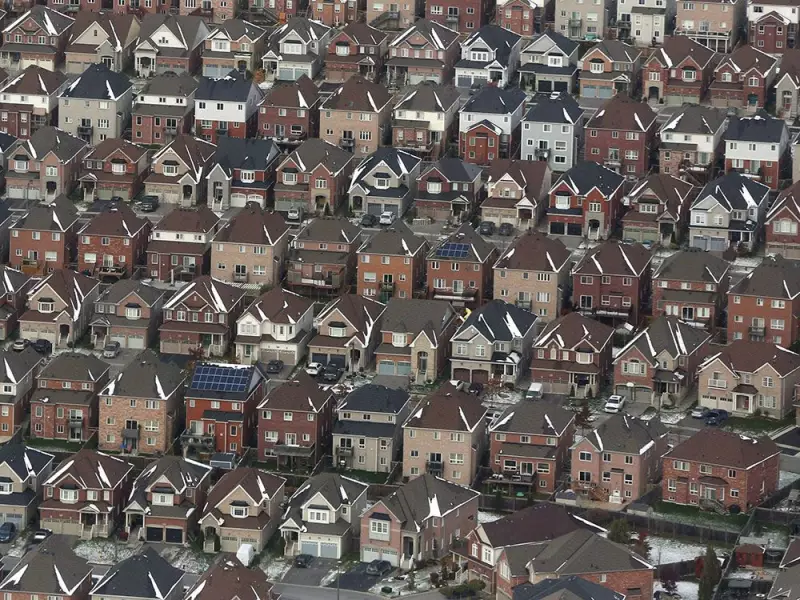
In a striking critique of Canada's fiscal policy, a top economist has declared that purchasing a home in the country has become "basically a sin" due to excessive taxation. Benjamin Tal, Deputy Chief Economist at CIBC World Markets, highlighted that the government levies taxes on housing at a rate surpassed only by those on tobacco and alcohol.
A Call for Federal Intervention on Housing Taxes
During a recent interview with the Financial Post's Larysa Harapyn, Tal presented a stark comparison. He asserted that the only items taxed more heavily than residential property in Canada are tobacco and alcohol, products traditionally subject to "sin taxes" due to their social costs. This framing positions homeownership, a cornerstone of financial security for many Canadians, in an alarming and punitive light.
Tal's comments, made on December 29, 2025, serve as a direct challenge to policymakers in Ottawa. He argues that this tax structure is fundamentally flawed and requires immediate correction to address the ongoing affordability crisis. The economist did not mince words, stating plainly that the current system needs to be fixed.

Economic Transition Ahead for 2026
Beyond the housing market, Tal provided his economic forecast for the coming year. He characterized 2026 as a "transition year" for the Canadian economy, moving from what he described as "something bad" toward "something better."
This perspective suggests that while challenges persist, the groundwork for recovery and improvement is being laid. His outlook implies that businesses and consumers may begin to see a gradual easing of pressures, though the path will be one of change rather than immediate resolution.
The Broader Implications for Homebuyers and Policy
Tal's analysis underscores a critical tension in Canadian public policy: the balance between generating government revenue and supporting attainable homeownership. By equating the tax burden on housing with that on vices, he highlights a potential misalignment of priorities that may be stifling market activity and burdening new buyers.
The call for reform points to a need for the federal government to reassess how housing is treated within the tax system. As the country looks toward 2026, the intersection of economic transition and housing policy will remain a focal point for families, investors, and elected officials alike.