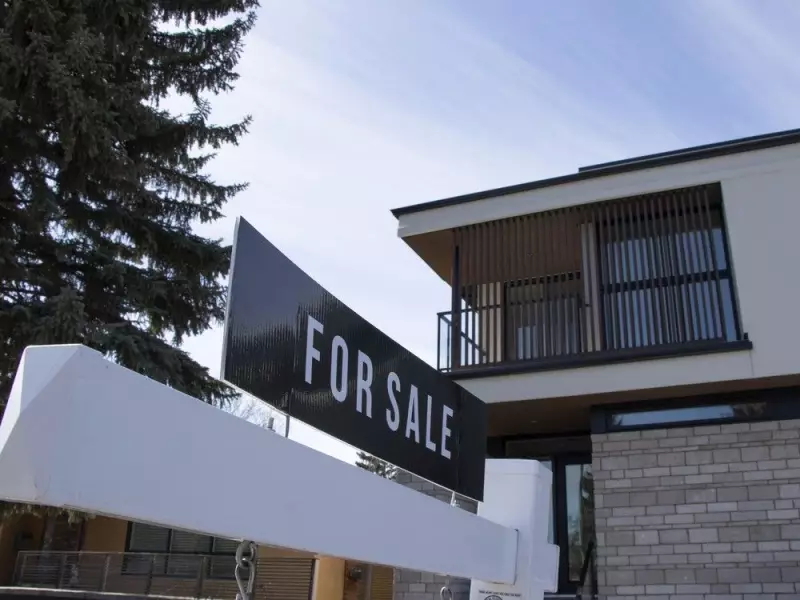
For home buyers in Edmonton, 2026 is shaping up to be the year of the house, according to a new year-end outlook from local real estate experts. A significant shift in buyer preference is underway, moving away from apartment-style condominiums and towards detached houses and townhouse options.
A Return to Balanced Market Conditions
The frenetic pace and intense competition that characterized the Edmonton real estate market over the last two years is expected to subside. Darlene Reid, board chair of the Realtors Association of Edmonton (RAE), forecasts a transition to a stable, balanced market in 2026.
"We’re predicting a very stable market, not a seller’s market, not a buyer’s market, but a balanced market," Reid stated in an interview. She described the coming trend as "more like a steady flow instead of like a flood we’ve seen the last two years."

This normalization means a departure from the record-breaking sales activity, including fewer bidding wars with multiple offers and a decline in the risky practice of submitting conditionless offers. Reid emphasized that this change affords buyers crucial time for due diligence.
"This balanced market gives buyers peace of mind that they don’t have to race to the finish line... They can take their time, they can do their due diligence. They can conduct a home inspection," she explained.
Seller Competition and Buyer Choice Increases
The new market dynamic will require sellers to be more strategic. Properties that are well-maintained and show well are expected to sell relatively quickly, while homes needing repairs or updates will likely linger longer on the market as buyers gain more options.
"Sellers are going to have to be more competitive. You could just throw a house on the market last year, and people bought anything. Now... if some homes are not showing well and they need repairs and maintenance, they’re going to sit longer, because buyers just have more choice now," Reid noted.
This shift is partly driven by sustained migration to the Edmonton region, which is anticipating up to 22,000 additional residents in 2026. Newcomers are attracted by a stable job market, growth in sectors like healthcare and education, and notably, more affordable housing compared to other major Canadian cities.
Reid highlighted a key affordability advantage: development costs in Alberta are kept in check, currently low at around four per cent, aided by lower permitting costs. "That’s a huge affordability advantage for Alberta, and specifically Edmonton," she said, adding that some clients are migrating from Calgary where a comparable home can cost nearly $200,000 more.
Apartment Condos Trend Downward as Houses Hold Strong
The RAE's analysis points to a clear cooling in the apartment-style condo segment, even as the overall market stabilizes from its previous record highs. Buyer demand is demonstrably pivoting towards ground-oriented homes.
"What the Realtors Association of Edmonton is predicting for 2026 is a lot of stabilization, coming down from an extremely hot — record-level-hot — market over the past two years," the report concludes.
Looking ahead, Darlene Reid expects semi-detached and detached homes to remain strong performers throughout 2026. While inventory may increase slightly, prices for these property types are still projected to see modest increases, reinforcing the trend that for many Edmontonians, this year will be focused on finding a house to call home.