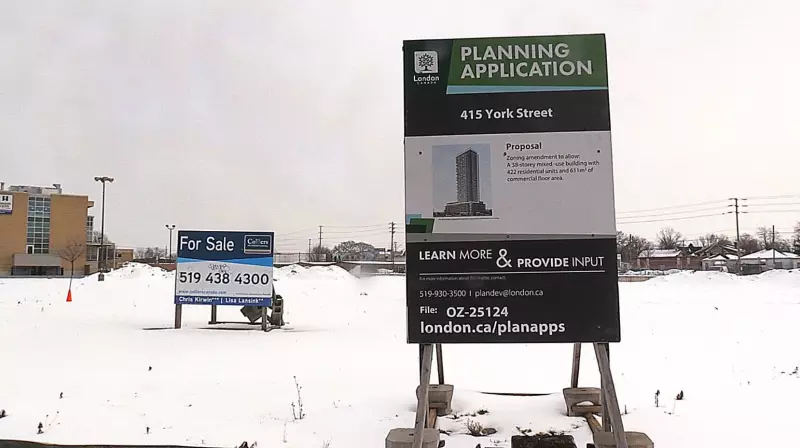
A proposed high-rise development for downtown London, initially considered too tall for its location, has been thrown a lifeline by the city's Planning Committee. The decision offers a potential path forward for a plan to construct a 38-storey mixed-use building on a former parking lot.
Controversial Proposal Gets a Second Chance
The ambitious project targets the southeast corner of York Street and Colborne Street. The site, currently a vacant lot previously used for parking, is at the heart of the debate. The developer's application for the 38-storey structure was initially met with resistance on the grounds that its height was inappropriate for the York Street location.
However, in a meeting on January 06, 2026, the Planning Committee decided not to reject the proposal outright. Instead, they have provided the developer with an opportunity to revise and potentially salvage the project. This move essentially pauses the process, allowing for further review and possible negotiations regarding the building's scale and design.

The Details of the Development Plan
The proposal, as reported by CTV News London's Daryl Newcombe, is for a significant mixed-use tower. This means the building would combine residential units, likely condominiums or apartments, with commercial spaces such as retail shops or offices on the lower floors. Such developments are often promoted as a way to increase density in urban cores, reduce reliance on cars, and revitalize downtown areas.
The central point of contention remains the building's proposed height of 38 storeys. Critics argue it may be out of character with the existing streetscape, could cast shadows, or put pressure on local infrastructure. Proponents typically highlight the benefits of adding housing and commercial activity to the city centre.
What Comes Next for the York Street Project
The committee's decision does not guarantee the tower will be built as proposed. It grants the developer a critical lifeline to address the city's concerns. The next steps will likely involve the developer submitting revised plans, which could include a reduction in height, changes to the building's massing, or enhanced community benefits.
The project will also need to go through further public consultation and planning processes before any shovels hit the ground. The outcome will be closely watched as a signal of London's approach to future high-density development in its downtown core. This case highlights the ongoing balancing act municipalities face between encouraging growth and maintaining community character.