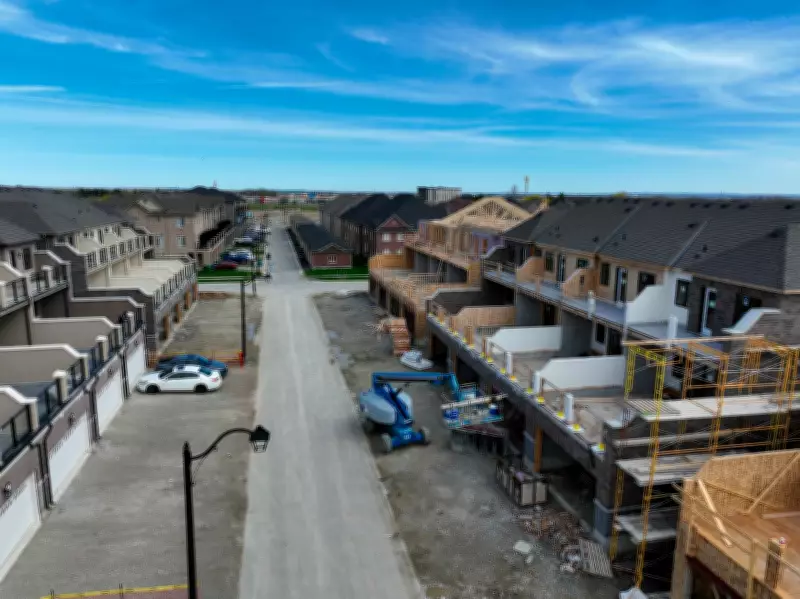
Ontario's Housing Construction Crisis Threatens 100,000 Jobs and Billions in Revenue
New home construction has long served as a fundamental pillar of Ontario's economic framework, supporting hundreds of thousands of jobs while generating billions in economic activity and essential tax revenue. This sector has played a crucial role in addressing the housing demands of a steadily growing population. However, recent data indicates this vital economic engine is now stalling, with consequences extending far beyond housing affordability alone.
An Economic Engine in Distress
Housing sales and construction starts data from 2025 reveal serious and compounding implications for employment, future housing supply, government revenues, and the province's long-term economic outlook. To grasp the severity of the situation, one must understand the typical 10-year pipeline for housing development. This process begins with land acquisition, planning, design, and approvals.
Approximately halfway through, pre-construction sales commence, followed by the start of physical construction, and finally completion when a unit is ready for occupancy. Years often separate each stage. The volume of homes under construction and the level of activity at each pipeline stage at any given time directly determines the sector's economic contribution and the number of jobs it supports.

Record-Low Sales and Plummeting Starts
Across Ontario, this development pipeline is now under significant strain. New home sales have declined to levels not witnessed since records began being kept and publicly reported in 1981. In 2025, sales plummeted to approximately 15,000 units province-wide, a dramatic drop from historic annual levels ranging between 65,000 and 85,000 homes.
This unprecedented decline will inevitably translate into fewer housing starts. By 2030, annual housing starts are projected to fall to roughly 40,000 units, including purpose-built rental, down from about 80,000 today. These alarming sales trends are even more pronounced in the Greater Toronto Area, where new home sales reached their lowest recorded level in 2025. Total sales for the year stood at a mere 5,314 units.
Single-family home sales were down 63 percent from the 10-year average, while condominium apartment sales experienced a staggering 89 percent decline.
On the construction side, the situation is equally dire. According to the latest data from the Canada Mortgage and Housing Corporation, housing starts in Ontario declined sharply in 2025. The province recorded 62,561 housing starts, down from 72,118 in 2024, representing a 13 percent year-over-year decrease in the number of new homes beginning construction.
Severe Employment and Revenue Consequences
This decline is particularly concerning because housing starts today reflect sales decisions made years earlier. With starts already decreasing, a sustained period of weak sales means fewer projects entering the pipeline, fewer homes under construction, and a further erosion of construction activity and employment in the coming years. This also signals critically low new home supply in the future, even as Ontario's population continues to expand.
The housing construction sector has been one of Ontario's most reliable employment engines. Over the past five years, from 2020 to 2024, new home construction supported an estimated 222,700 jobs across the province on average each year. This includes:
- More than 104,000 direct construction jobs
- Nearly 73,000 indirect jobs among suppliers and related industries
- More than 45,000 induced jobs supported by the spending of those workers
If the current slowdown persists, the economic consequences will be severe. Projections indicate it could result in the loss of approximately 100,000 jobs from a residential construction workforce of roughly 225,000. This would mean the loss of almost $13 billion in wages and earnings by 2030, with widespread implications including an estimated $1.3 billion in lost personal and corporate income tax revenue annually.
Furthermore, the sector's contribution to provincial GDP would shrink dramatically, from $31.7 billion annually to just $10.4 billion. Governments at all levels would feel the substantial financial impact. Annual losses are projected at:

- $2.4 billion in provincial sales tax
- $1.4 billion in income tax
- $700 million in land transfer tax
- $3.9 billion in municipal development charges and related fees
This represents a combined $8.5 billion hit to public revenues every year, funds essential for public services and infrastructure.
A Call for Immediate Government Action
One of the most effective and immediate steps governments can take is to remove the Harmonized Sales Tax from new homes, which would provide immediate affordability relief. Reducing this sales tax would deliver direct, meaningful savings to buyers while helping restore financial viability to projects currently stalled in the pipeline.
The time has come for both federal and provincial governments to fully eliminate the HST on all new homes—not just for first-time buyers—to lower the cost of housing, encourage buyers back into the market, and get the industry back to work. What began as a housing market issue has clearly escalated into a full-scale economic emergency demanding decisive and coordinated government action to prevent long-term damage to Ontario's economy and workforce.