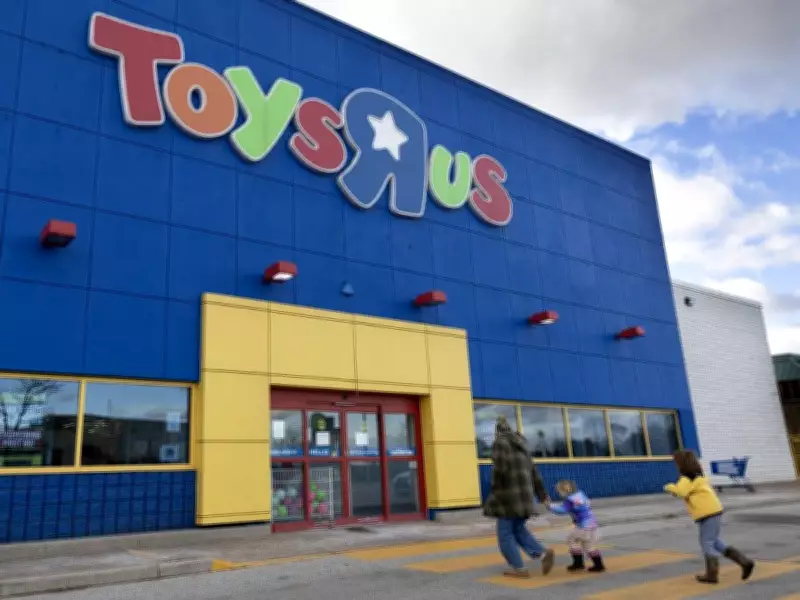
Toys 'R' Us Canada Files for Creditor Protection Amid Nearly $500 Million Debt Burden
Toys "R" Us Canada has officially sought court protection from its creditors, becoming the latest legacy retailer to turn to legal restructuring measures as it navigates significant financial challenges. The company initiated proceedings under Canada's Companies' Creditors Arrangement Act (CCAA) on Tuesday, a move that allows businesses to continue operations while reorganizing their finances.
Court Protection and Immediate Store Operations
The Ontario Superior Court of Justice granted an initial order providing a 10-day stay of proceedings, shielding the company from creditor actions while it evaluates available options. According to the company's statement, all remaining Toys "R" Us locations across Canada will remain open during this initial phase of the restructuring process.
However, the company has signaled that further retrenchment lies ahead, explicitly stating that the restructuring will include "reducing its retail footprint to better position the company in today's retail environment." This suggests that while stores remain operational for now, closures are likely in the near future as part of the company's strategic realignment.

Financial Details and Leadership Appointments
A financial report published by the court-appointed monitor reveals the stark reality of the company's financial situation. Toys "R" Us Canada has total estimated assets of $126.85 million against staggering liabilities of $496.78 million. Notably, this debt burden includes approximately $36 million in unredeemed gift cards, which the company has proposed to continue honoring for a limited 14-day period.
The company has appointed restructuring specialist Neil Taylor as chief restructuring officer, while Alvarez & Marsal Canada has been named as the court-appointed monitor to oversee the entire restructuring process. These appointments reflect the seriousness of the financial situation and the need for expert guidance through the CCAA proceedings.
Historical Context and Retail Challenges
This filing represents the latest chapter in the ongoing contraction of what was once a dominant force in Canadian toy retail. The Canadian division of Toys "R" Us managed to survive the collapse of its U.S. parent company, which filed for bankruptcy protection in 2017. The Canadian operations were subsequently acquired by Fairfax Financial in 2018 and later by Putman Investments in 2021.
Despite these ownership changes, the chain has continued to shrink dramatically, declining from 82 stores in 2018 to just 22 locations as of Tuesday's filing. All remaining stores are leased rather than owned, providing some flexibility in the restructuring process but also reflecting the company's diminished physical presence.
Broader Retail Industry Pressures
Retail analysts emphasize that the challenges facing Toys "R" Us Canada are emblematic of broader transformations in how Canadians purchase toys and entertainment products. Several key factors have converged to erode the competitive advantage once held by big-box toy specialists:
- The dramatic rise of online shopping, particularly through dominant platforms like Amazon
- The growing market share captured by mass discount retailers such as Walmart
- The explosion of digital games and entertainment alternatives that compete for children's attention and family spending
- Changing consumer preferences and shopping patterns that favor convenience and price competitiveness
These market forces have created a particularly challenging environment for specialty toy retailers, forcing established brands like Toys "R" Us to reconsider their business models and physical footprint in an increasingly digital marketplace.
The CCAA filing allows Toys "R" Us Canada time to develop a comprehensive restructuring plan while maintaining operations, though the company's acknowledgment of necessary retail footprint reductions suggests significant changes lie ahead for the iconic toy retailer's Canadian presence.