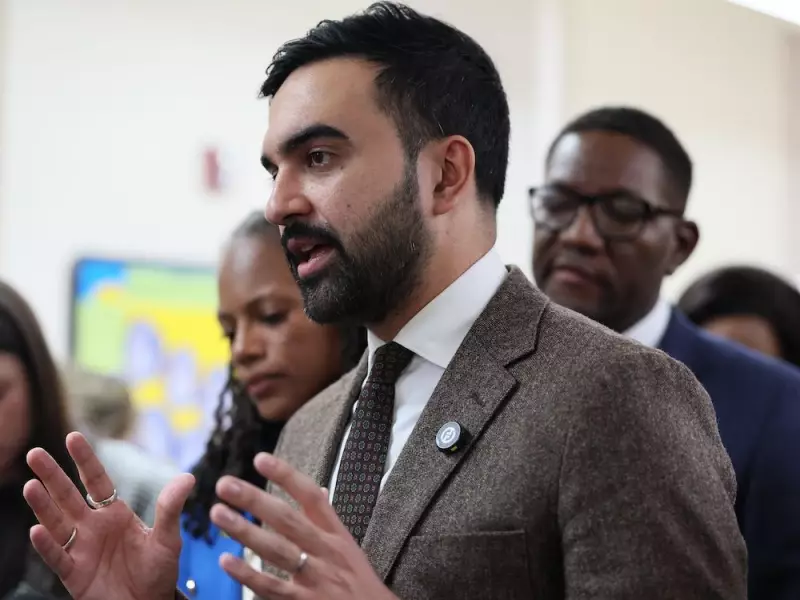
The surprising victory of self-declared Marxist Zohran Mamdani as New York City's mayor-elect on November 14, 2025 represents a pivotal political shift that extends far beyond the city's borders. This development signals a growing socialist sentiment, particularly among younger generations who feel economically marginalized.
The Generational Divide in Political Allegiance
Mamdani's election exposes a stark generational split in political values. The candidate secured an astonishing 70 percent of the vote among New Yorkers under 40, while failing to connect with older residents who have longer histories in the city. This pattern suggests that age, rather than ethnicity or traditional class divisions, is becoming the primary predictor of political alignment in Western democracies.
Traditional working-class neighborhoods with significant Black and Latino populations, including areas of the Bronx, Brownsville, and Rosedale, largely supported Andrew Cuomo in the primary. Meanwhile, younger voters—including those with comfortable incomes—propelled an inexperienced, pro-Hamas Marxist to leadership of capitalism's global headquarters.

Housing Affordability as Political Catalyst
The driving force behind this political realignment appears to be the escalating cost of living, particularly housing unaffordability. New Yorkers pay the highest proportion of their income toward housing costs among American cities, with homeownership rates at half the national average. This crisis extends throughout English-speaking countries, including Ireland, which recently elected a far-left Marxist president.
In the United States, housing affordability has reached its lowest recorded level, with one in three Americans spending over 30 percent of their income on housing costs. Homeownership among Americans under 35 has declined steadily for decades and now stands at half the rate of those over 45. Similar trends are evident in Britain and Australia.
Canadian Youth Face Parallel Challenges
Canada mirrors these concerning trends, with Toronto and Vancouver ranking among the world's most unaffordable cities. A 2024 Scotiabank poll revealed that homeownership among Canadians aged 18-34 has plummeted to 26 percent today from 47 percent in 2021. The rental situation offers little relief, with two in five Canadian renter households spending 30 percent or more of their income on rent and utilities.
Beyond housing, young Canadians confront additional economic headwinds. People aged 15-24 face unemployment rates roughly two-fifths higher than older cohorts—the highest in decades. This generation demonstrates less physical activity, greater screen commitment, and profound distrust toward major institutions. According to Nanos Research, 64 percent of young Canadians aged 18-34 express skepticism about the current economy, fearing they may never achieve the prosperity their parents experienced.
This combination of economic pressures is reshaping political landscapes across Western nations, with younger voters increasingly rejecting traditional economic models in favor of more radical solutions.