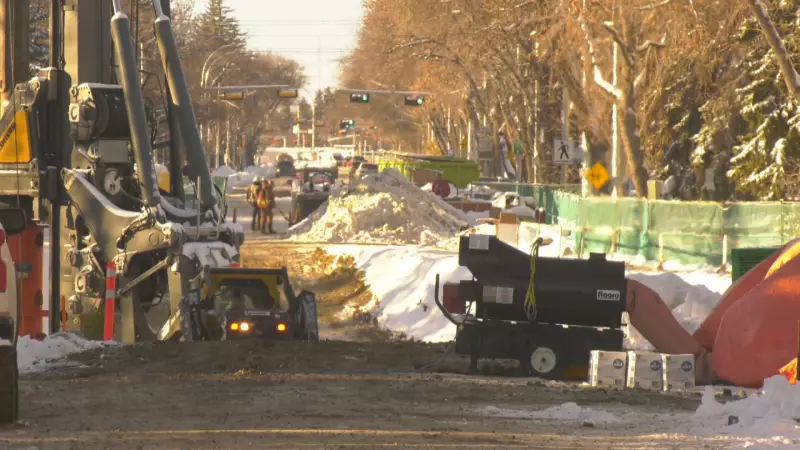
Businesses along Edmonton's High Street are navigating a challenging start to the new year, reporting a noticeable dip in sales coinciding with the ongoing closure of the nearby Wellington Bridge. The construction project, which began recently, has significantly altered traffic patterns and customer access to the popular commercial strip.
Construction Disruption and Economic Pressure
The closure, visible in the area as of January 6, 2026, has created a tangible barrier for the community. While the sales decrease is described by some proprietors as modest, its occurrence during a period already complicated by broader economic factors like tariffs adds a layer of difficulty. The sentiment on the street is one of cautious observation, with many owners finding it "hard to say" precisely how much of the downturn is directly attributable to the bridge project versus other market forces.
Local Business Resilience Tested
For small, independent shops and restaurants that form the backbone of High Street, consistent customer flow is vital. The detour and reduced convenience are testing the resilience of these establishments. The situation underscores the delicate balance municipal infrastructure projects must strike between necessary upgrades and maintaining economic vitality for local enterprises. Business operators are now tasked with finding creative ways to attract and retain patrons despite the access hurdles.

Looking Beyond the Immediate Hurdle
The bridge closure is a temporary but impactful disruption. The broader conversation among business owners and community leaders now focuses on mitigation and the future. Key points of discussion include:
- Enhancing wayfinding and signage to guide customers through alternative routes.
- Exploring localized promotional campaigns to remind residents of the district's accessibility.
- Planning for a potential surge in activity once the bridge reopens and construction concludes.
The experience on High Street serves as a real-time case study in how urban development phases can ripple through a local economy. The hope is that the short-term pain will lead to long-term gain with improved infrastructure, but for now, the focus remains on weathering the interim period of reduced accessibility and its effect on the bottom line.