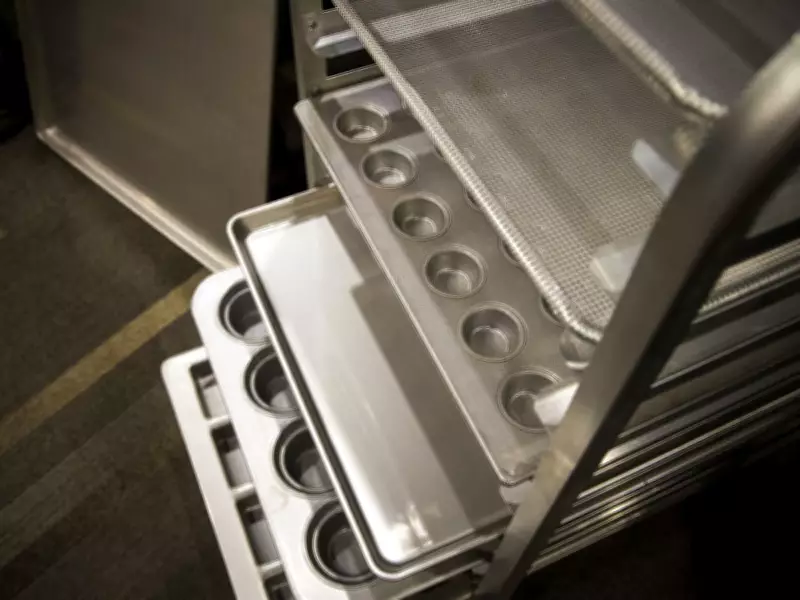
American Pan Seeks Tariffs on Chinese Baking Pans Citing National Security Concerns
American Pan, the largest manufacturer of industrial and commercial baking pans in the United States, has filed a formal "Tariff Inclusion Request" with the U.S. government, arguing that national security requires imposing tariffs on competing Chinese baking pans. This petition comes in response to previous tariffs on steel and aluminum that have significantly increased production costs for domestic manufacturers.
The Tariff Domino Effect
The company explains that Washington's existing tariffs on raw materials have dramatically increased their production costs—aluminum prices have surged by 90 percent while steel costs have risen by 40 percent. These tariffs, initially implemented by the Trump administration last year at rates of 50 percent on most imports (or 25 percent for select countries), have created a challenging competitive environment for American manufacturers of derivative products like baking pans.
In response to these economic pressures, the government has allowed manufacturers of derivative products to petition for protective tariffs on their finished goods as well. American Pan's request represents one of the first major applications of this policy extension, testing the boundaries of what constitutes a national security concern in trade policy.

The National Security Argument
American Pan's petition presents a detailed argument connecting baking pans to national security through food supply chains. The company contends that increased imports of low-cost Chinese pans "is a threat to National Security by threatening the food security of the United States." Their reasoning follows a specific chain of potential events: if Chinese imports bankrupt U.S. pan manufacturers, and if China imposes an embargo during wartime, America would lack the necessary equipment to produce essential baked goods.
The petition states, "Without pans and trays the domestic industrial and commercial bakeries will not be able to produce bread, buns, baguettes, crusty rolls, cakes, muffins, and the like to consumers. Shelves at grocery stores will be bare... Without Bread, buns, baguettes, crusty rolls, cakes, muffins, and the like people will not be able to maintain a healthy diet. This is also true for soldiers in the U.S. military."
The document further emphasizes the military implications, noting that "It is well known that 'armies march on their stomachs,' and without a source of grains the readiness of the U.S. military will be threatened, and therefore our national security." The petition's language, complete with occasional typos and straightforward style, suggests it comes from a practical manufacturing business rather than corporate legal teams.
Critical Perspectives on the Argument
Several significant factors challenge American Pan's national security justification. First, in any potential war scenario with China, resources would inevitably be reallocated—whether through market mechanisms or government intervention. The priority might shift toward munitions production and military recruitment rather than maintaining commercial baking pan manufacturing at pre-war levels.
Second, alternative sourcing options exist. Even if Chinese imports were restricted, the United States could potentially import baking pans from neutral or allied countries, assuming export bans weren't universally imposed and America maintained international partnerships.
Third, and most importantly, this argument establishes a potentially limitless precedent. If tariffs on baking pans can be justified to prevent crusty roll shortages during wartime, then similar national security arguments could be made for virtually any manufactured product. A tariff on industrial sewing machines could be justified to prevent Americans from going naked in conflict. Tariffs on prescription drugs could support domestic pharmaceutical industries to avoid medication shortages. This logic could extend across the manufacturing spectrum, despite manufactured goods accounting for less than 25 percent of total consumer spending since 1990, with services comprising the majority of economic activity.

The petition raises fundamental questions about how broadly national security concerns should be interpreted in trade policy and whether such arguments might be used to justify protectionism across numerous industries facing international competition.