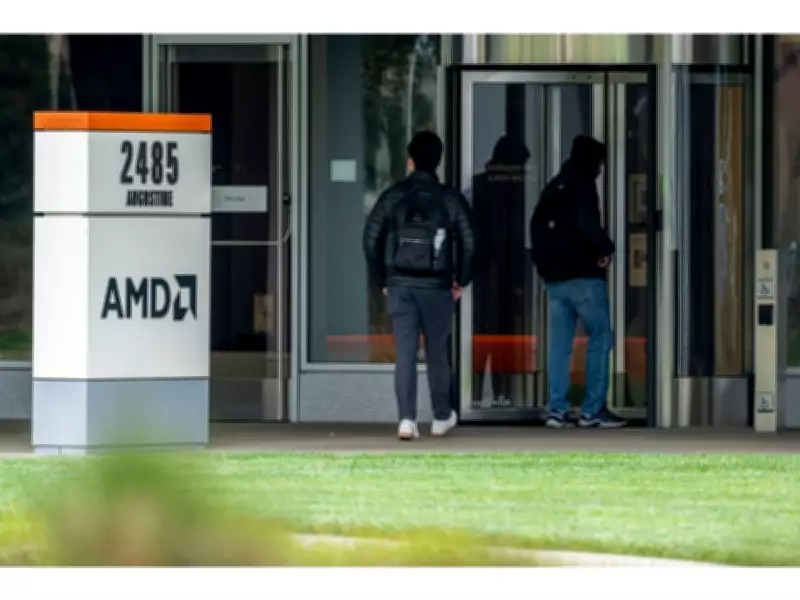
AMD Experiences Sharpest Stock Decline Since 2018 Following Disappointing Revenue Outlook
Advanced Micro Devices Inc. faced its most significant stock market downturn in over seven years this week, with shares plummeting as much as 16 percent during Wednesday's trading session. This dramatic decline represents the company's worst intraday performance since October 2018, despite AMD having enjoyed a 13 percent year-to-date gain through Tuesday's close.
Sales Forecast Falls Short of Lofty Expectations
The semiconductor manufacturer projected first-quarter sales of approximately US$9.8 billion, with a potential variance of US$300 million either direction. While this figure exceeded the average analyst estimate of US$9.39 billion, it failed to meet the more optimistic projections that had surpassed US$10 billion. This discrepancy between expectations and reality triggered the substantial market reaction, as investors expressed disappointment with the company's artificial intelligence revenue trajectory.
Chief Executive Officer Lisa Su maintained her characteristically optimistic stance during the company's conference call, reiterating her prediction that AMD's artificial intelligence revenue would reach tens of billions of dollars by 2027. She addressed concerns about potential component shortages directly, assuring analysts that the company possesses adequate capacity to fulfill anticipated order increases.

Strong Quarterly Performance Overshadowed by Future Concerns
AMD reported impressive fourth-quarter results that surpassed market expectations, with sales increasing 34 percent to reach US$10.3 billion compared to the average estimate of US$9.7 billion. The company's profit, excluding certain items, reached US$1.53 per share, significantly exceeding the projected US$1.32 average.
The data centre division, which serves as the primary beneficiary of artificial intelligence spending, demonstrated particularly robust growth with a 39 percent increase to US$5.38 billion. Meanwhile, personal computer-related sales rose 34 percent to US$3.1 billion, outperforming analyst predictions in both segments.
Navigating Complex International Trade Restrictions
Similar to its competitor Nvidia Corporation, AMD continues to contend with United States export restrictions affecting shipments to China, the world's largest semiconductor market. Although former President Donald Trump recently moved to relax these limitations, obtaining necessary licenses from the Department of Commerce has proven time-consuming.
The company generated US$390 million in revenue during the last quarter from sales of older-generation MI308 chips to Chinese customers, with expectations of approximately US$100 million in similar sales during the current period. This decline reflects diminishing demand for increasingly outdated technology. AMD remains engaged in discussions with Washington regarding licenses for its newer MI325 processor, which it hopes to offer to Chinese clients in the future.
Mixed Impact of Chinese Market Operations
AMD's continued sales of legacy chips in China present a complex scenario for the company. While these transactions contribute positively to overall revenue and demonstrate the company's ability to navigate challenging trade restrictions, they simultaneously exert downward pressure on profit margins due to the less advanced nature of these products.
The market reaction underscores investor concerns about AMD's competitive position in the lucrative artificial intelligence sector, where the company continues to trail industry leader Nvidia. However, AMD executives have indicated that a new, more powerful chip design scheduled for release in the second half of this year could provide a significant competitive advantage.
Despite the disappointing forecast, AMD maintains substantial partnerships with major technology firms including OpenAI and Oracle Corporation, with expectations that these collaborations will generate tens of billions of dollars in new revenue streams over the coming years.