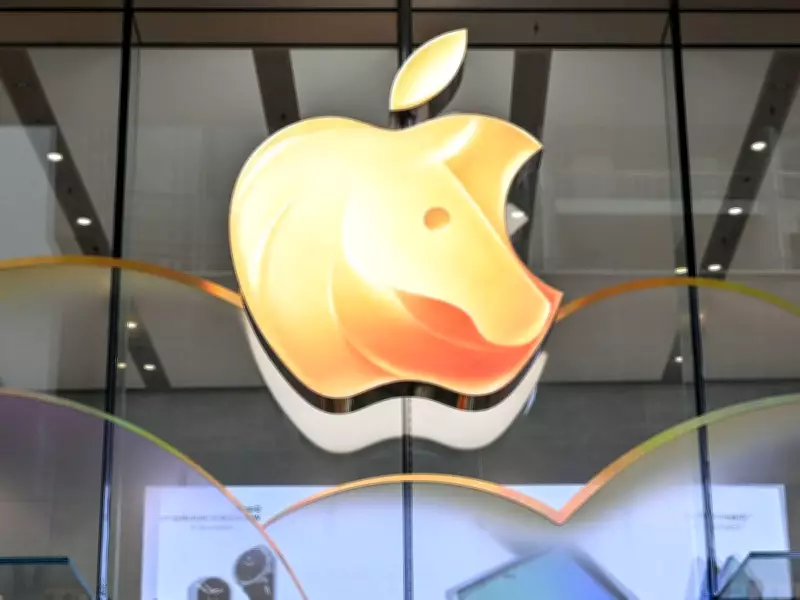
Apple Emerges as Safe Haven Amid Tech Sector AI Anxiety
In a remarkable market divergence, Apple Inc. has significantly outperformed technology stocks and broader market indices as investors increasingly view the iPhone maker as a sanctuary of stability amidst growing fears surrounding artificial intelligence disruption. This trend represents the most substantial outperformance by Apple in over a year, highlighting a strategic shift in investor sentiment toward companies perceived as less vulnerable to AI-related market volatility.
Market Performance Highlights Stark Contrast
On Wednesday, Apple shares demonstrated notable resilience with a 1.8 percent increase during midday trading in New York, while the technology-heavy Nasdaq 100 Index experienced a substantial 2.4 percent decline. This performance gap marks Apple's widest margin of outperformance since early 2025, continuing a pattern that has seen the company's stock rise nearly six percent at the start of the current month compared to the index's 3.3 percent decrease.
The sustained gains have propelled Apple's market capitalization to just over $4 trillion, enabling the company to narrowly surpass Alphabet Inc. for the position of the world's second-largest corporation, trailing only Nvidia Corp. This milestone underscores Apple's remarkable financial strength during a period of significant uncertainty within the technology sector.

Strategic Positioning in the AI Landscape
According to Dan Eye, chief investment officer at Fort Pitt Capital Group, which maintains Apple holdings across multiple portfolios, the current market dynamics reveal a crucial distinction. "It doesn't seem like the AI disruption theme is extending to hardware, which is certainly a positive at a time when the market has made the decision that AI is going to eat the entire software space," Eye observed. This perspective highlights how Apple's hardware-centric business model provides insulation against the market turbulence affecting software-focused technology companies.
The divergence between Apple and other technology giants reflects both positive developments within Apple and increasing uncertainty across much of the technology sector. Apple recently reported record quarterly sales accompanied by a better-than-expected forecast, while simultaneously, new AI tools from Alphabet Inc. and startup Anthropic have triggered widespread selling of technology stocks as investors express concerns that AI services might erode traditional growth avenues.
Hardware as the AI Access Point
Industry analysts anticipate that Apple will benefit significantly from broader AI adoption, with hardware devices like the iPhone expected to serve as primary platforms through which users access AI services. This strategic positioning received reinforcement last month when Alphabet's Google entered into a multiyear agreement to power Apple's AI technology, including enhancements to the Siri voice assistant system.
"Apple isn't a value name, but it isn't high-risk either," Eye noted, emphasizing the company's balanced position within the current market environment. This assessment suggests that while Apple may not represent traditional value investment opportunities, it also avoids the elevated risk profiles associated with companies making substantial AI infrastructure investments.
Software Sector Under Pressure
Meanwhile, software stocks have faced considerable downward pressure, with a prominent exchange-traded fund tracking the sector declining 2.7 percent and approaching its seventh consecutive negative trading session. This represents the longest losing streak for software investments in more than two years. Even industry giant Microsoft Corp. has experienced a 14 percent decline this year following earnings that revealed disappointing performance in its cloud-computing division alongside increased scrutiny of its substantial AI-related expenditures.

"Apple's decision to stay out of the AI arms race seems like a smarter play today than it did six months ago," Eye concluded. "It should still benefit from AI, but it isn't forced to run up a hundred billion in debt and capital expenditures to fund extensive infrastructure and development projects." This strategic restraint positions Apple uniquely within the technology landscape, allowing it to capitalize on AI advancements without bearing the financial burdens associated with aggressive infrastructure investment.