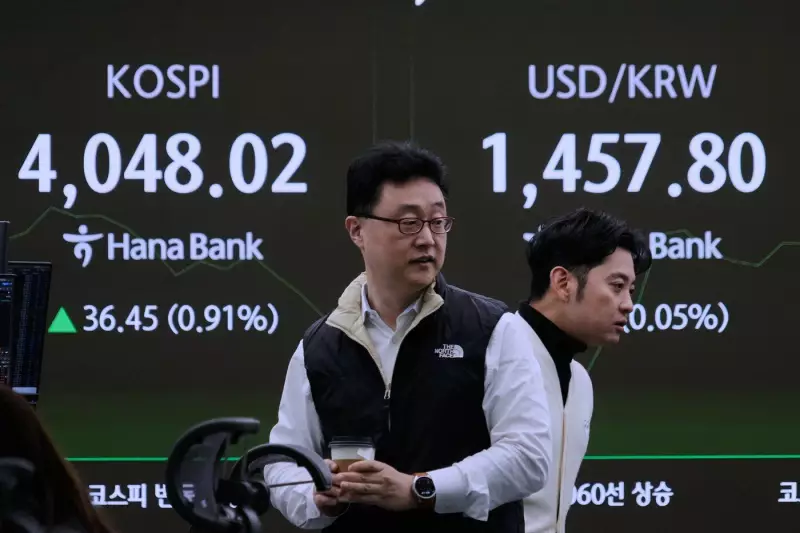
Financial markets in Asia displayed a divided performance on Monday, November 17, 2025, following a significant downturn in United States stock markets. The mixed trading session reflected ongoing uncertainty among investors about global economic conditions.
Market Performance Across Asia
Traders across the Asian region carefully monitored market movements as various indices responded differently to the previous week's decline on Wall Street. The divergence in performance highlighted the complex interplay between regional economies and global market trends.
At the foreign exchange dealing room of Hana Bank headquarters in Seoul, South Korea, currency traders actively watched screens displaying the Korea Composite Stock Price Index (KOSPI) alongside the exchange rate between the U.S. dollar and South Korean won. The visual documentation from the trading floor captured the intense focus of financial professionals navigating the volatile market conditions.

Global Economic Context
The market movements occurred against a backdrop of broader economic developments that have been capturing attention across Canada and international financial centers. While Asian markets grappled with the aftermath of U.S. market performance, Canadian investors were monitoring multiple domestic stories with potential economic implications.
Recent developments in Canadian retail included the announcement that a toy is being pulled from shelves across the country after a U.S. child choked on a piece of the product. This consumer safety issue emerged alongside ongoing discussions about the future of Canadian currency, with experts questioning whether the nickel might follow the penny into obsolescence.
Broader Market Implications
The mixed performance in Asian markets typically signals cautious investor sentiment that can influence trading decisions in North American markets when they reopen. Currency fluctuations between major pairs, including the U.S. dollar and South Korean won observed in Seoul, often have ripple effects across global trade and investment flows.
Market analysts are paying close attention to how these international developments might affect Canadian economic indicators and consumer behavior, particularly as holiday shopping seasons approach with some Canadian shoppers indicating that tariff uncertainty is changing their spending plans.