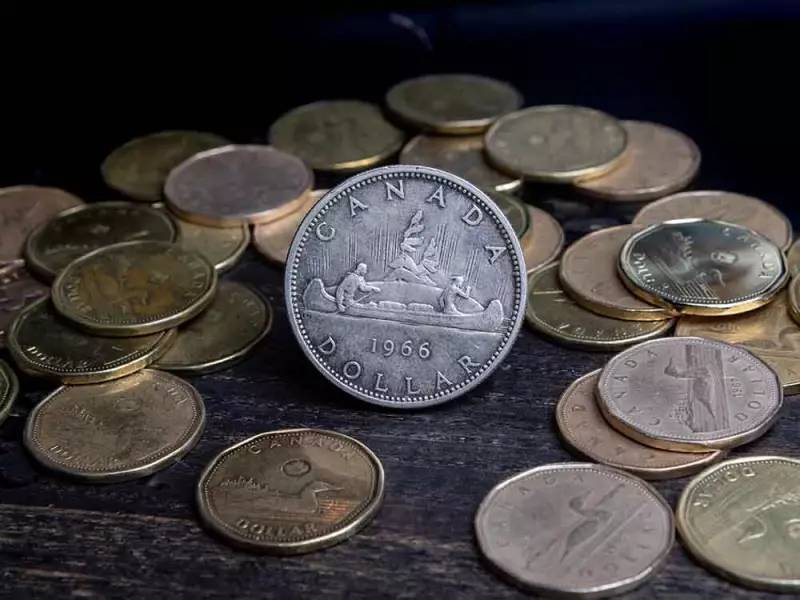
The optimistic start-of-year forecasts for the Canadian dollar have been thrown into disarray following a dramatic geopolitical event. The loonie has taken a significant hit in the wake of a U.S. military intervention in Venezuela and the abduction of its former president, Nicolás Maduro, which occurred over the weekend of January 9-10, 2026.
From Bullish Predictions to a Sudden Sell-Off
At the beginning of 2026, many economists projected a strong performance for the Canadian currency. The consensus view was for the loonie to start the year trading around 72.5 cents U.S. and to climb steadily throughout the year, potentially reaching a range of 74 to 76 cents U.S. by year's end.
However, those projections were swiftly upended. By Monday, January 12, the Canadian dollar was trading lower against the U.S. dollar. The decline was directly linked to market anxieties sparked by the American attack on Venezuela and concerning statements from U.S. President Donald Trump regarding other nations, including Colombia, Mexico, and Greenland.

The sell-off continued through the week. The currency fell 0.7 per cent and was dangerously close to breaking below the 72 cents U.S. threshold, a level not seen since early December.
The Oil Price Connection and a Petrocurrency Paradox
A primary driver of the loonie's weakness appears to be renewed pressure on oil markets, challenging the notion that the currency has moved beyond its "petrocurrency" reputation. Karl Schamotta, chief market strategist at Corpay Inc., noted this shift contradicts the long-standing belief that the Canadian dollar had evolved into a real estate-levered proxy for financial conditions.
The price of West Texas Intermediate (WTI), the U.S. crude benchmark, was trading around US$57 a barrel on Thursday, January 15, following a 20 per cent drop in the previous year. Canada's heavy crude benchmark, Western Canadian Select (WCS), fared even worse, falling 25 per cent last year due to a global supply glut estimated at two to three million barrels per day above demand.
Schamotta clarified that while the loonie is tracking lower with oil, its petrodollar days are technically behind it. The current decline is more closely tied to a challenging long-term energy outlook. The fear is that Venezuelan heavy crude, now potentially coming back online, could displace Canadian oil exports to key U.S. Gulf Coast refineries.
Economic Consequences for Canada
The potential impact on Canada's economy, and Alberta's in particular, could be severe. Charles St-Arnaud, chief economist at Servus Credit Union Ltd., provided a stark assessment. He calculated that a 10 per cent reduction in Albertan oil exports to the U.S.—representing the share typically processed on the Gulf Coast—would cost the province approximately $13 billion.
This loss would translate into a direct three per cent hit to Alberta's gross domestic product (GDP). Schamotta echoed this concern, stating that lower oil prices over a prolonged period would limit investment in Canada's energy sector, thereby lowering the overall growth outlook for the national economy.
In summary, the geopolitical shock initiated by the U.S. action in Venezuela has not only triggered a immediate sell-off in the Canadian dollar but has also cast a long shadow over its recovery prospects for 2026. The event has forcefully reintroduced oil market volatility as a key determinant for the loonie, threatening both provincial revenues and broader economic growth at a time when many analysts believed the currency's dependence on crude was fading.