European Markets Rise as Asian Shares Fall Amid Widening Iran Conflict and Oil Price Surge
On Wednesday, March 4, 2026, global financial markets exhibited a stark divergence, with European equities gaining ground while Asian shares experienced significant declines. This split occurred as the military conflict with Iran broadened, triggering a sharp surge in oil prices that unsettled investors worldwide.
Market Movements and Geopolitical Tensions
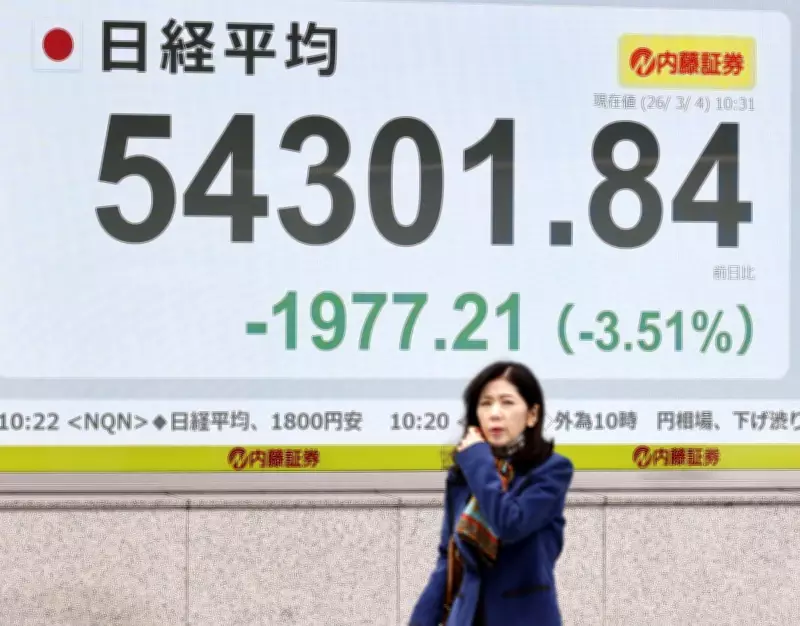
In Europe, major indices posted gains, reflecting a degree of resilience amid the geopolitical turmoil. Conversely, Asian markets, particularly Japan's Nikkei index, swooned as traders reacted to the escalating Middle East crisis. The Nikkei was prominently displayed on electronic stock boards at securities firms in Tokyo, symbolizing the day's bearish sentiment in the region.
The widening war with Iran served as the primary catalyst for market volatility. Reports indicated that the conflict was expanding, heightening fears of prolonged instability in a key oil-producing region. In response, oil prices jumped by 4.7 percent, settling at their highest level since January 2025. This surge underscored the immediate economic impact of the hostilities, as energy costs climbed sharply.

Global Economic Implications
The market reactions highlighted the interconnected nature of global finance and geopolitics. European markets, while advancing, remained cautious, with investors weighing the potential for further disruptions. The gains in Europe suggested some optimism about regional economic stability, but the overall environment was fraught with uncertainty due to the Middle East situation.
In Asia, the decline in shares was more pronounced, driven by concerns over how the conflict and higher oil prices could affect trade-dependent economies. The downturn reflected broader anxieties about supply chain interruptions and inflationary pressures, which could dampen economic growth in the coming months.
Broader Context and Future Outlook
The day's events occurred against a backdrop of other global news, including developments in Canadian politics and business, but the financial markets were squarely focused on the Iran conflict. Analysts noted that the volatility was likely to persist as long as the war continued to escalate, with oil prices acting as a key barometer of market sentiment.
Looking ahead, investors are monitoring the situation closely, anticipating potential further shifts in market dynamics. The divergence between European and Asian markets may continue if geopolitical risks remain elevated, influencing investment strategies and economic forecasts worldwide.