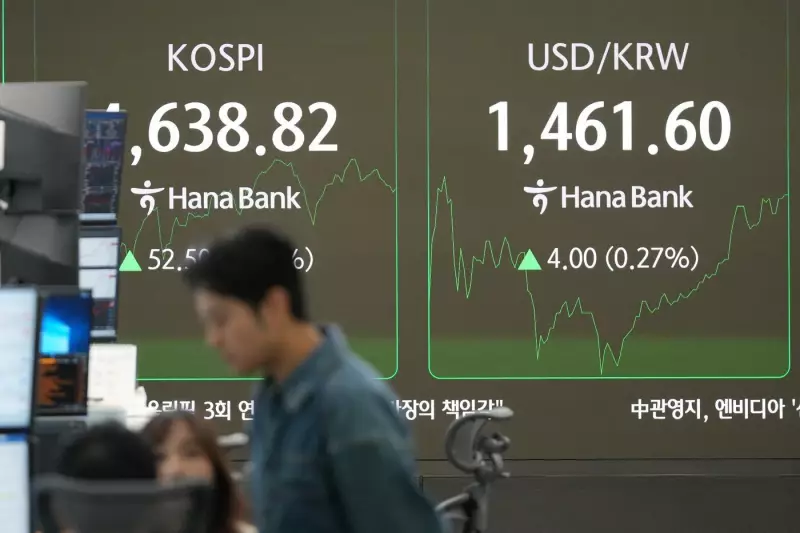
Financial markets opened the week on a cautious note, with U.S. stock futures trending lower and global shares presenting a mixed picture. The subdued sentiment coincides with reports that Federal Reserve Chair Jerome Powell is confronting a legal threat, adding a layer of uncertainty for investors worldwide.
Market Movements Amidst Uncertainty
U.S. equity futures pointed to a weaker opening, signaling apprehension among traders. Meanwhile, the performance of world shares was fragmented, with some indices gaining while others retreated. This divergence highlights the complex interplay of local economic factors against a backdrop of central bank policy concerns emanating from the United States.
The situation underscores the delicate balance central bankers like Powell must maintain. Their decisions on interest rates and monetary policy are closely scrutinized, and any external pressure, including legal challenges, can influence market perceptions of stability and independence.

The Powell Factor and Broader Context
The specific nature of the legal threat against Fed Chair Powell was not detailed in the initial reports. However, such developments can create headwinds for market confidence, as investors prize predictability from the world's most influential central bank. The Fed's policy path is a primary driver for capital flows and currency valuations globally, affecting everything from mortgage rates in Canada to export competitiveness.
This market update arrives amidst a busy news cycle. From a major business acquisition, with the co-founders of SSENSE buying back the Montreal-based company, to geopolitical tensions affecting commodity prices, investors have multiple factors to weigh. The finance minister's travel to discuss trade and critical minerals with G7 counterparts also highlights the interconnected nature of policy and markets.
Implications for the Trading Week
Analysts suggest that the market's immediate reaction may be tempered as participants await further details on the legal proceedings and any potential impact on monetary policy. The focus will likely remain on economic data and corporate earnings for directional cues. However, the development serves as a reminder of the non-economic risks that can introduce volatility into financial markets.
For Canadian investors and businesses with exposure to U.S. markets or the cross-border trade relationship, monitoring this situation is crucial. Shifts in U.S. monetary policy or significant dollar volatility can have direct consequences for investment portfolios and corporate bottom lines north of the border.