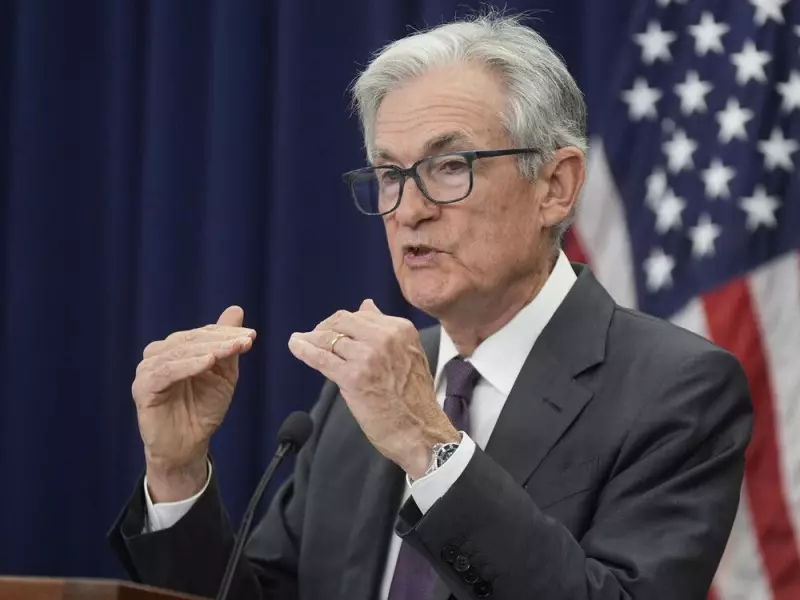
Financial markets experienced a wave of "Sell America" sentiment on Monday, January 12, 2026, following a significant escalation in the Trump administration's criticism of the United States Federal Reserve. The move has intensified investor concerns regarding the central bank's autonomy in setting monetary policy.
Market Impact and Powell's Statement
The U.S. dollar, Treasury bonds, and U.S. equity futures all declined after Federal Reserve Chair Jerome Powell stated that the threat of a U.S. criminal indictment was a direct consequence of a disagreement over monetary policy. While the market moves were relatively contained, the hot-button issue of Fed independence and its implications for U.S. financial stability resurfaced prominently in global investor debates.
Bloomberg's dollar index fell by 0.3 per cent, marking its largest single-day drop since December 23. Futures for the S&P 500 slid 0.6 per cent. In the bond market, the yield on the benchmark 10-year U.S. Treasury note advanced three basis points to 4.20 per cent, on track for its highest closing level since September. Yields on the 30-year bond rose five basis points to 4.86 per cent.

Investor Reaction and Strategic Shifts
Portfolio managers and strategists warned that the developments could reinforce trends of diversification away from U.S. assets. Gary Tan, a portfolio manager at Allspring Global Investments, which oversees more than US$600 billion, noted that any event questioning the Fed's independence adds uncertainty to U.S. monetary policy. "This is likely to reinforce existing trends of diversification away from the dollar and increase interest in traditional hedges such as gold," Tan said.
Other firms echoed this cautious stance. Lombard Odier warned that the U.S. dollar and Treasuries could face further pressure if tensions escalate. Invesco Asset Management suggested that non-U.S. assets, including European and Asian equities, may appear more favorable to investors seeking stability.
Roots of the Confrontation
The latest clash stems from events on Sunday evening, when Chair Powell revealed that the U.S. central bank had been served with grand jury subpoenas from the Department of Justice. These subpoenas are related to his congressional testimony concerning ongoing renovations at the Fed's headquarters. This action represents the newest front in a series of confrontations between the administration and the Fed, which have included efforts to fire Governor Lisa Cook and repeated public calls for aggressive interest rate cuts.
In an interview with NBC News on Sunday, former President Donald Trump denied having any knowledge of the Justice Department's investigation. However, he has long pressured the Fed to cut interest rates more quickly to stimulate the economy and reduce government borrowing costs, while Fed officials have remained wary of persistent inflationary pressures.
Ian Lyngen, head of U.S. rates strategy at BMO Capital Markets, characterized the situation starkly, writing in a note, "To characterize the events as putting the Fed independence discussion into uncharted waters would be an understatement." He added that his team's outlook remains skewed toward higher yields in the near term.
The core debate now gripping markets centers on the extent to which a U.S. president can and should influence the nation's interest rate stance—a function that has been largely insulated from political interference for decades. For global and Canadian investors, the episode revives critical questions about the wisdom of maintaining heavy exposure to U.S. assets and the dollar, a theme that similarly dominated markets last April when Trump announced sweeping universal tariffs.
Bhanu Baweja, chief strategist at UBS Investment Bank, summarized the concern, stating, "This is a bad time to be worrying about Fed independence for the market," and highlighted that U.S. inflation is likely to rise in the coming months. As the situation develops, market participants are bracing for potential deeper selloffs should the political and legal tensions surrounding the Federal Reserve continue to intensify.