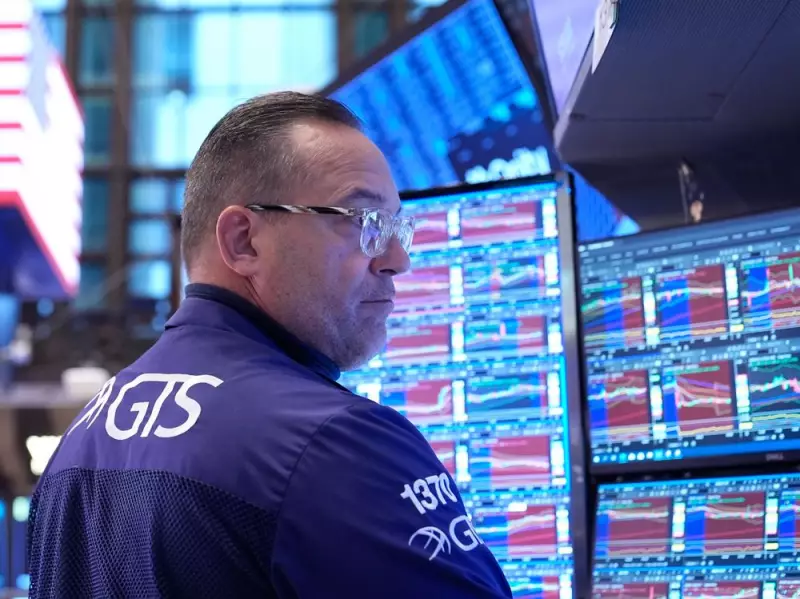
While the U.S. stock market appears unstoppable, hovering near unprecedented all-time highs, a deeper analysis reveals several cautionary signals that should give investors pause. Despite a year marked by significant economic turmoil, including tariff wars, active military conflicts, and concerns over the weaponization of the U.S. dollar, equity indices have continued their ascent, prompting experts to advise a healthy dose of skepticism.
Warning Signs Beneath the Surface
The current market trajectory is becoming parabolic, a pattern that historically serves as a red flag for seasoned investors. Unlike the dramatic V-shaped recoveries typical of market bottoms, tops are a more protracted process that can unfold over many months. However, there are clear indicators that such a peak may be forming. One of the most compelling reasons for caution stems from technical analysis, which assesses whether the market is overbought and due for a correction.
A particularly alarming technical signal has emerged: a negative divergence of an extreme never seen before. This occurs when the internal health of the market deteriorates even as its overall price rises. Specifically, the number of stocks within the S&P 500 Index hitting new one-year lows has been increasing during the recent rally. This precise phenomenon was observed prior to the market correction in 1998 and, more ominously, just before the major market top in March 2000 when the dot-com bubble burst.

Valuations at Record Highs
Another critical factor giving analysts pause is market valuation. A blended average of several long-term valuation metrics shows that the U.S. stock market is at a record high in data stretching back over 100 years. While valuations alone cannot pinpoint the exact moment a market will turn, they offer a stark preview of the potential depth of a fall. History shows that when valuations reach such exceptional levels, subsequent corrections have ranged from 30% to 50%.
The cost of investing has also become substantially higher in real terms. The number of hours an average person must work to buy one contract of the S&P 500 index has jumped to more than 200. This is a sharp increase from the 140 hours required just before the pandemic and is significantly higher than the roughly 100 hours needed at the market peak in 2000, which was followed by a drop of over 50% in the ensuing two years.
A Fragile Foundation for Growth
The current rally has unfolded against a backdrop of an artificial-intelligence spending boom and high-profile corporate bankruptcies, referred to as cockroaches by JPMorgan Chase & Co. CEO Jamie Dimon. With AI companies investing heavily in data centers, parallels are being drawn to the excesses of the past, making the possibility of another tech sector bust far from inconceivable.
For Canadian investors watching these developments, the message is clear: the market's strength may be more fragile than it appears. While picking a market top is notoriously difficult, the confluence of extreme valuations and worrying technical divergences suggests it is a prudent time to be more fearful and less greedy. A cautious and skeptical approach may be the best strategy as stocks test their historical limits.