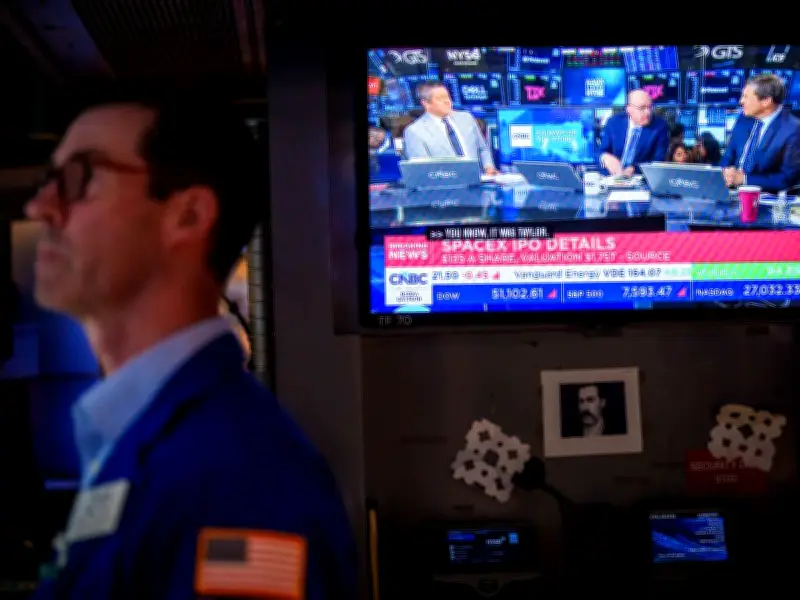
Having spent 41 years in the investment business and purchasing my first stock 52 years ago (Mitel Corp.), I can confidently say I have witnessed many market phenomena. However, the level of 'fear of missing out' (FOMO) surrounding the recent initial public offering (IPO) of Space Exploration Technologies Corp. (SpaceX) is unprecedented. At 5i Research, we fielded hundreds of inquiries about whether to buy shares and what to sell to fund purchases. Let's examine the SpaceX frenzy and compare it to other instances of investor mania.
The SpaceX IPO Frenzy
Brokers report that institutional demand for SpaceX shares exceeded available supply by several times. Experts describe this as a once-in-a-generation listing, fueled by intense retail demand and FOMO. Factors driving the excitement include the Elon Musk brand, the allure of a space company, the deal's sheer size, and Tesla Inc.'s historical performance (up 2,878% over the past decade, per Bloomberg). Stock market indexes are even considering rule changes to allow SpaceX to list without the usual waiting period. Fund managers project a potential US$14 trillion market opportunity. However, at publication, the stock has barely begun trading. FOMO typically inflates valuations, and while SpaceX is not yet profitable, its price-to-sales ratio stands at about 100 times. We cannot predict its performance, but it is undeniably expensive, even before any IPO pop.
Past FOMO Investments and Their Outcomes
Dot-Com Bubble (1998–2000)
During the dot-com bubble, investors rushed into any technology or internet company, fearing they would miss the new era of online commerce. Companies simply adding '.com' to their names saw valuations double overnight. The Nasdaq Composite surged 21% in 1997, 40% in 1998, and 86% in 1999. How did this FOMO end? The Nasdaq plummeted 78% over the next three years. Most dot-coms went bankrupt or were acquired at a fraction of their former value. A few survivors like Amazon.com Inc. and Microsoft Corp. thrived, but the index did not recover its peak until 2015.

GameStop Corp. (2021)
GameStop shares skyrocketed over 2,000% in early 2021 as users on Reddit's WallStreetBets forum executed a near-perfect short squeeze. The stock briefly hit about US$87, up from a low of 70 cents the prior year (split-adjusted). Millionaires were made on paper, and some short-selling funds shut down. However, after the squeeze, GameStop collapsed roughly 90% in weeks, causing heavy losses for FOMO investors. The stock remains about 60% lower over the past five years.
Bitcoin and Cryptocurrency Mania
Bitcoin's price surged from under US$1,000 in 2017 to nearly US$20,000 by December 2017, driven by FOMO and media hype. It then crashed to around US$3,000 in 2018, a decline of 85%. Subsequent rallies and crashes followed, with bitcoin reaching about US$69,000 in 2021 before falling to US$16,000 in 2022. While some early adopters profited, many latecomers suffered significant losses.
Lessons for Investors
FOMO investments often lead to inflated valuations and eventual disappointment. While some opportunities yield massive gains, most result in substantial losses for those who buy at the peak. The key is to focus on fundamentals, avoid herd mentality, and maintain a disciplined investment approach. As history shows, what goes up rapidly can come down just as fast.