Former U.S. President Donald Trump sent shockwaves through the defence industry this week, causing notable volatility in the stocks of major American military contractors. His comments on international security and defence spending created immediate uncertainty for investors, leading to sharp price movements for companies central to national security.
Geopolitical Remarks Trigger Market Reaction
The market turbulence began following public statements from Trump concerning global alliances and defence procurement. While the specific details of the comments were not detailed in the initial report, their impact was felt instantly on trading floors. Analysts noted that investors in the defence sector are particularly sensitive to political rhetoric that could signal shifts in Pentagon spending priorities or international relations.
The reaction highlights the continued influence of Trump's pronouncements on financial markets, especially in industries heavily reliant on government contracts. Defence stocks have historically been viewed as stable, long-term investments, but they remain susceptible to political risk. This episode underscores how geopolitical statements can translate directly into financial volatility.

Broader Context of Defence Sector Sensitivity
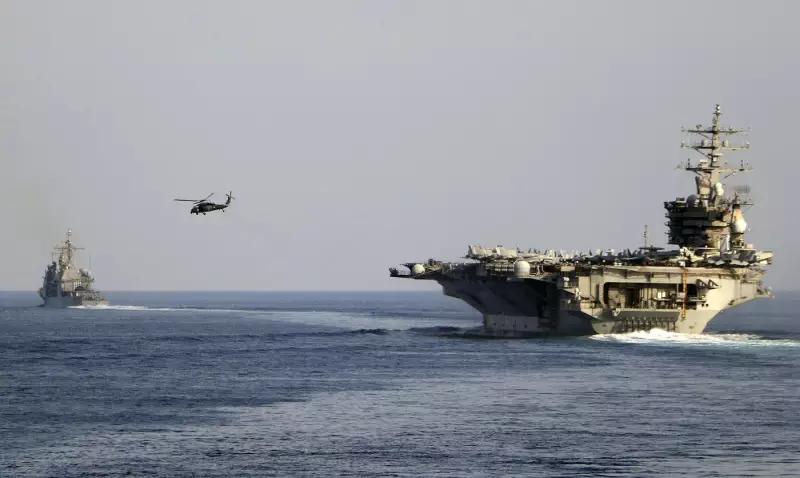
The event occurred against a backdrop of ongoing global tensions, illustrated by imagery such as the USS Dwight D. Eisenhower's transit through the Strait of Hormuz in late 2023. Such military postures are constant reminders of the world's security landscape, which directly fuels demand for defence products and services. When a prominent political figure comments on this landscape, markets react by reassessing future revenue streams for companies like Lockheed Martin, Northrop Grumman, and Raytheon.
This is not the first time political discourse has moved defence stocks. The sector often acts as a barometer for anticipated changes in government policy and budget allocations. The speed of this week's sell-off and subsequent adjustments shows how quickly algorithmic and institutional trading responds to perceived risk.
Implications for Investors and Policy
For Canadian investors and market watchers, the volatility serves as a case study in cross-border financial contagion. U.S. defence giants are held in many portfolios and indices tracked globally, meaning their price swings have ripple effects. The incident also raises questions about the stability of long-term defence budgeting in a politically charged environment.
Looking ahead, analysts will be watching to see if the stock movements represent a short-term overreaction or the beginning of a longer-term repricing based on new political expectations. The key takeaway for market participants is the renewed proof that political rhetoric remains a potent, non-economic force capable of moving major market sectors. Investors are advised to factor in this type of geopolitical risk alongside traditional financial analysis when considering defence and aerospace holdings.