Airport Chaos Persists Despite Trump's Emergency TSA Pay Order
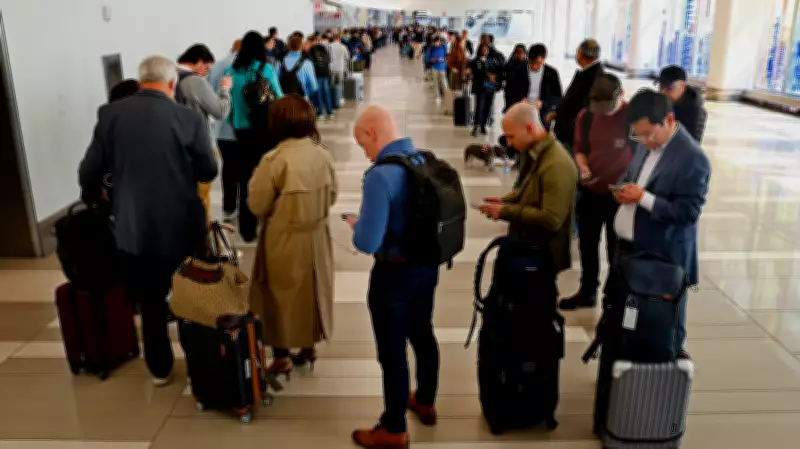
Even after President Donald Trump signed an executive order directing emergency pay for Transportation Security Administration agents, major U.S. airports on Sunday continued urging travelers to arrive hours early for flights. Federal immigration officers brought in to assist may remain in place indefinitely as staffing strains continue.
Emergency Pay Implementation Uncertain
President Trump's Friday executive order instructed the Department of Homeland Security to pay TSA officers immediately, though it remains unclear how quickly travelers will experience relief. The timing coincides with a busy travel period featuring spring breaks and upcoming Passover and Easter holidays.
Tens of thousands of TSA employees have worked without compensation since DHS funding lapsed on Valentine's Day. The department's shutdown reached 44 days on Sunday, surpassing last fall's record 43-day government-wide shutdown.

White House border czar Tom Homan addressed the situation on Sunday morning news programs, stating that ICE's continued presence at airports depends on how many TSA employees return to work after receiving pay. "ICE is there to help our brothers and sisters in TSA. We'll be there as long as they need us," Homan told CBS's "Face the Nation."
Payment Concerns and Staffing Challenges
Homan expressed hope during a CNN "State of the Union" interview that TSA officers would receive payment by Monday or Tuesday. "It's good news because these TSA officers are struggling," he said. "They can't feed their families or pay their rent."
However, significant concerns remain about the payment process. Johnny Jones, secretary-treasurer of the American Federation of Government Employees' TSA chapter, described the situation as "a disaster in progress." Workers worry they may not receive full back pay due to short notice given to TSA management for processing payments.
Nearly 500 TSA officers have left the agency since the shutdown began, according to DHS figures. Homan noted that ICE's continued deployment also depends on how many TSA agents "have actually quit and have no plan on coming back to work."
Airport Operations and Passenger Impacts
Several major airports reported continued challenges on Sunday:
- Houston's George Bush Intercontinental Airport warned that TSA wait times could reach four hours or longer
- Atlanta's Hartsfield-Jackson International Airport advised passengers to arrive at least four hours early for all flights
- LaGuardia Airport posted alerts about "longer than usual" TSA lines
- Baltimore-Washington International Airport noted improved wait times but still recommended early arrival
- New York area airports restored estimated security wait times to their websites after removing them earlier in the week
Maryland Governor Wes Moore announced Saturday night that additional ICE agents were being deployed to Baltimore-Washington International Airport specifically to assist with security checkpoint operations, not immigration enforcement.
Long-Term Outlook Remains Uncertain
Travel experts caution that significant improvement may take time. Caleb Harmon-Marshall, a former TSA officer who runs the Gate Access travel newsletter, suggested the staffing crisis won't improve substantially until officers feel confident about consistent paychecks. "It has to be an extended pay for them to come back or want to stay there," he said, estimating longer lines could persist for another week or two.
Jones offered a more optimistic perspective, hoping that wait times could approach typical levels once workers can afford basic expenses like transportation to work. However, TSA must still decide whether to reopen checkpoints and security lanes closed or consolidated due to inadequate staffing.
Some airports have experienced daily TSA officer call-out rates exceeding 40% in recent weeks, highlighting the ongoing staffing challenges despite the emergency pay order.