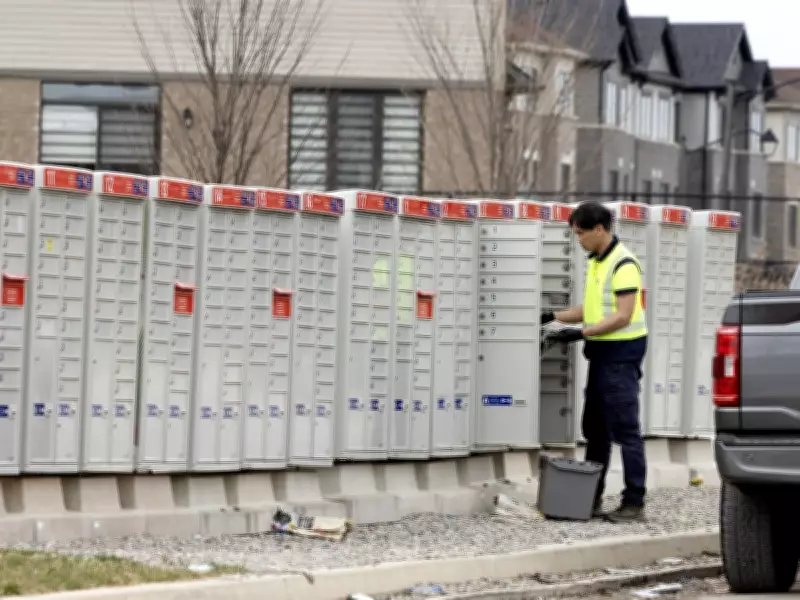
Canada Post Phases Out Door-to-Door Delivery in 13 Communities Nationwide
Canada Post has announced a significant shift in its delivery operations, with approximately 136,000 addresses across 13 communities losing door-to-door mail service. Instead, these locations will transition to community mailboxes, beginning in late 2026 and continuing into early 2027. This change affects 31 postcodes and is part of a broader effort to improve the corporation's financial sustainability.
Communities Affected by the Initial Phase
The first batch of conversions is concentrated in several regions, with British Columbia seeing the most impact. In total, the affected areas include:
- Moncton and Riverview, New Brunswick: Postcodes E1B, E1C, E1E, and E1G
- Sept-Îles, Quebec: Postcodes G4R and G4S
- La Prairie and Candiac, Quebec: Postcode J5R
- Ottawa, Ontario: Postcodes K1B, K1G, K1H, K1J, and K1K
- Etobicoke, Ontario: Postcodes M9V and M9W
- Winnipeg, Manitoba: Postcodes R2P, R2R, R2V, R2W, R2X, R3E, and R3H
- Abbotsford, British Columbia: Postcodes V2S and V2T
- Mission, British Columbia: Postcode V2V
- North Vancouver and West Vancouver, British Columbia: Postcodes V7M, V7P, V7R, V7S, V7T, V7V, and V7W
Notably, most of these addresses are adjacent to areas already served by community mailboxes, facilitating a smoother transition. Dense urban areas will be addressed in later stages of the multi-year conversion program.

Financial Drivers Behind the Change
This move is driven by Canada Post's urgent need to cut costs and achieve long-term financial stability. The corporation has faced severe financial challenges in recent years, accumulating over $5 billion in losses since 2018. In 2024 alone, it lost more than $1 billion, and it reported its worst quarterly results ever in the second quarter of 2025, with a loss of $407 million.
Canada Post claims that phasing out household delivery entirely over the next five years will result in annual savings exceeding $400 million. The corporation stated in a recent news release, "Canada Post's transformation will strengthen the postal service, allow it to be a better partner for businesses, enable national commerce, and help it meet its dual mandate of delivering for all Canadians without being a recurring burden on taxpayers."
Current Delivery Landscape and Future Plans
Currently, nearly three-quarters of Canadian addresses already receive mail through centralized delivery methods, such as community mailboxes, apartment lobby boxes, or post office boxes. However, about four million addresses still rely on door-to-door delivery, highlighting the scale of the ongoing transition.
Canada Post plans to engage with communities to identify suitable locations for community mailbox sites and will keep residents informed throughout the process. The corporation emphasized that this shift marks a "turning point" in its operations, aiming to enhance efficiency while maintaining service reliability.
As this program rolls out, it represents a significant change in how Canadians receive their mail, reflecting broader trends toward cost-effective and sustainable postal services in the face of mounting financial pressures.