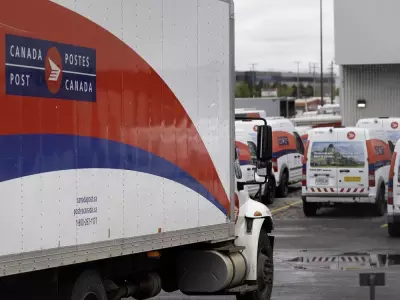
Canada Post Phases Out Door-to-Door Mail Delivery Nationwide
In a significant shift for postal services in Canada, Canada Post has announced the elimination of door-to-door mail delivery, affecting approximately four million households across the country. This move comes less than five months after the federal government lifted moratoriums on installing new community mailboxes, marking a pivotal step in the crown corporation's efforts to modernize and address severe financial challenges.
Addressing an 'Existential Crisis' in Postal Operations
The decision is part of a broader strategy to right-size resources and combat what the federal government described last year as an 'existential crisis' for the postal service. Canada Post has been grappling with mounting losses, reporting a deficit of $541 million in the third quarter of last year alone and cumulative operating losses exceeding $5 billion since 2018. To stabilize its finances by 2030, the corporation is implementing cost-saving measures, with the transition from door-to-door delivery expected to yield annual savings of around $400 million.
Currently, about 25% of Canadian addresses still receive mail delivered directly to their doors. Door-to-door delivery costs $279 per address annually, compared to just $157 per address for community mailboxes, highlighting the economic incentive behind the change. In a statement released on Monday, Canada Post emphasized that this transformation aims to strengthen the postal service, enhance partnerships with businesses, and fulfill its mandate in a financially sustainable manner.

Consultations and Stakeholder Engagement Underway
Canada Post has initiated consultations with its bargaining units on the proposed changes, which include not only the shift to community mailboxes but also the potential consolidation or closure of rural post offices and a transition from air to ground transportation for non-urgent mail. These measures are projected to save an additional $20 million per year. The corporation stated that it will engage municipal officials and other key stakeholders once initial consultations are complete, while also collaborating with the government to update delivery standards under the Canadian Postal Service Charter.
However, the announcement has sparked controversy, particularly with the Canadian Union of Postal Workers (CUPW). Union officials have criticized the timing, arguing that it undermines ongoing labour negotiations and ratification votes. In a statement, CUPW urged the government to conduct a full public mandate review before approving any changes, emphasizing the need for input from all stakeholders nationwide. This tension adds to existing labour strife, despite a tentative deal reached last year between the union and Canada Post.
Broader Context and Future Implications
The move reflects broader trends in the postal industry, where traditional letter mail has been largely supplanted by digital communication like email, and parcel services face stiff competition from couriers and e-commerce giants such as Amazon and AliExpress. In September 2025, the federal government introduced measures to streamline Canada Post and adapt to these modern realities, but the elimination of door-to-door delivery represents a tangible step in this evolution.
As Canada Post navigates this transformation, it remains committed to protecting access to essential postal services while addressing its financial woes. The outcome of consultations and union negotiations will be critical in shaping the future of mail delivery in Canada, impacting millions of households and the broader logistics landscape.