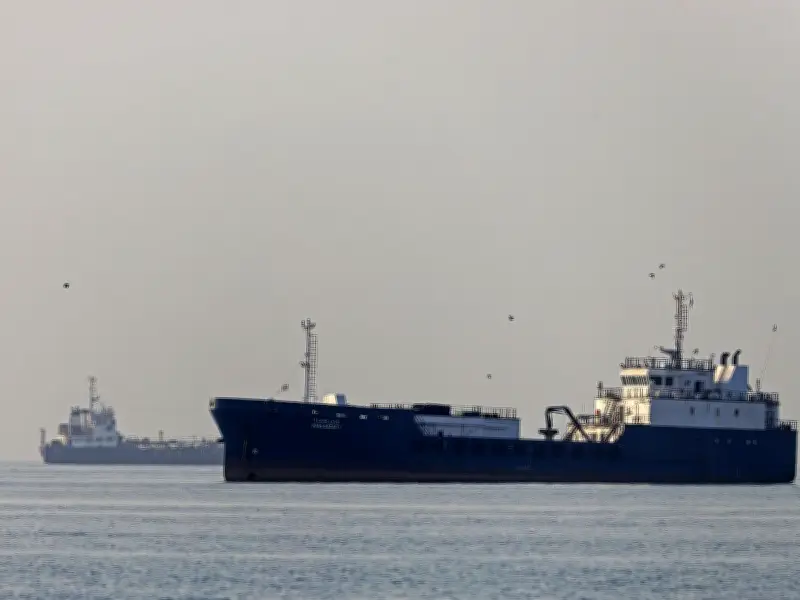
Dozens of commercial vessels have reportedly navigated the Strait of Hormuz in recent weeks, bypassing Iran's heavy restrictions amid the ongoing conflict. U.S. Central Command has guided nearly 70 ships through the narrow waterway over three weeks, according to U.S. officials cited by the New York Times on Sunday. This averages about three ships per day, a stark contrast to the pre-conflict daily traffic of over 130 vessels.
Covert Operations and Coordination
The ships have been traveling with their transponders turned off to avoid detection and staying close to the Omani coastline, the report stated. Captain Tim Hawkins of Central Command clarified that while U.S. forces are not escorting, they continue to communicate and coordinate with commercial ships seeking safe transit through the strait, a critical corridor for global economies.
Iran's Blockade and Its Impact
Iran imposed restrictions on the strait—through which more than a fifth of global oil flows—after Israeli-U.S. bombing raids in late February decapitated Iran's leadership and destroyed nuclear and military sites. Tehran enforces its blockade using sea mines, boarding ships, and attacking non-allied vessels. Since February 28, over a thousand ships and approximately 20,000 seafarers have been stranded in the Persian Gulf.

Some ships continue to approach Iranian coasts, suggesting deals with Tehran for passage. The Persian Gulf Strait Authority (PGSA), a new Iranian agency, has implemented a tiered access system, charging some tankers while allowing others free passage. Payments are funneled to the Islamic Revolutionary Guard Corps, according to the U.S. Treasury, which has prohibited any such deals. Earlier reports indicated Iran charges about US$1 per barrel of oil for ships linked to the U.S. or Israel.
Sanctions and Warnings
The U.S. Treasury stated on May 29 that regardless of payment, U.S. persons are prohibited from receiving services from the Government of Iran, including safe passage guarantees. The Office of Foreign Assets Control warned that financial arrangements with Iran for passage carry sanction risks, involving fiat currency, digital assets, offsets, informal swaps, or charitable donations to entities like the Iranian Red Crescent Society.
Last week, a Bloomberg analysis revealed that over 109 large oil tankers—about one-quarter of non-Iranian tankers capable of carrying 700,000 barrels or more—have escaped the Persian Gulf through the strait.