Forty years have passed since one of Canada's most devastating transportation tragedies unfolded on the tracks near Hinton, Alberta. The collision between a CN Rail freight train and a Via Rail passenger train on February 8, 1986, resulted in the deaths of 23 people and left a permanent scar on the nation's consciousness.
The Day of the Catastrophe
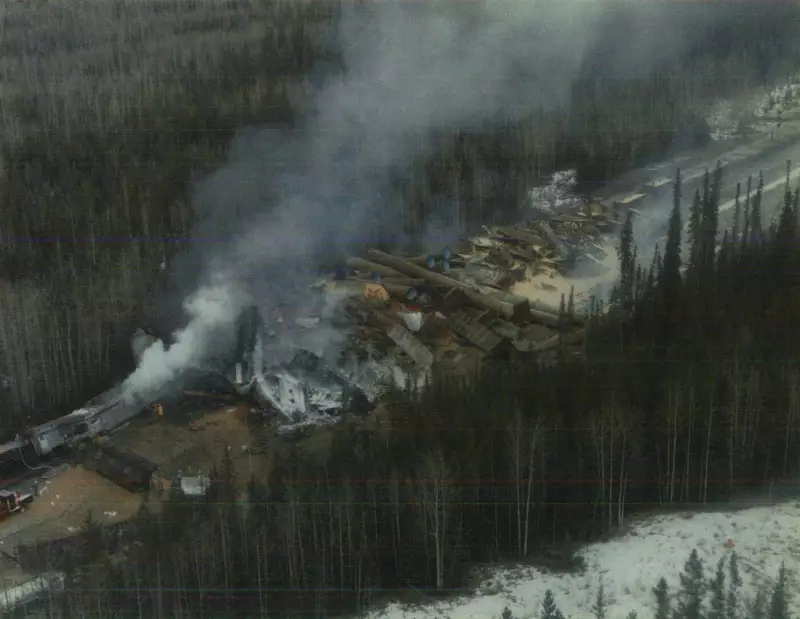
The disaster occurred approximately 16 kilometres east of Hinton, Alberta. In the early morning hours, a CN freight train and a Via Rail passenger train, known as the "Super Continental," met head-on. The force of the impact was catastrophic, leaving a scene of tangled rail cars and billowing smoke that would become etched in memory through aerial photographs of the wreckage.
The official inquiry into the collision revealed a tragic convergence of human error and procedural failure. It was determined that the crew of the freight train had failed to stop at a signal, leading directly to the deadly meeting on a single stretch of track.

Aftermath and Lasting Impact
The immediate aftermath was a massive rescue and recovery operation. The scale of the destruction made it one of the worst rail accidents in Canadian history. A Commission of Inquiry was swiftly established to investigate the causes and to recommend changes to prevent a similar tragedy.
The findings of the Hinton train collision inquiry led to sweeping reforms in rail safety practices across Canada. Recommendations focused on enhanced crew management, stricter adherence to signal protocols, and improved safety systems. The disaster became a grim benchmark, prompting railways and regulators to critically re-examine operational procedures.
A Legacy of Memory and Safety
Four decades later, the Hinton disaster remains a pivotal moment in Canada's transportation history. It serves as a somber reminder of the profound responsibility inherent in moving people and goods across vast distances. Memorials and annual remembrances honour the 23 individuals whose lives were cut short.
While safety technology has advanced significantly since 1986—with the implementation of systems like locomotive voice and video recorders and positive train control—the fundamental lessons of Hinton endure. The tragedy underscored the non-negotiable necessity of vigilance, rigorous training, and a culture where safety protocols are paramount. The memory of those lost continues to drive the pursuit of a safer rail network for all Canadians.