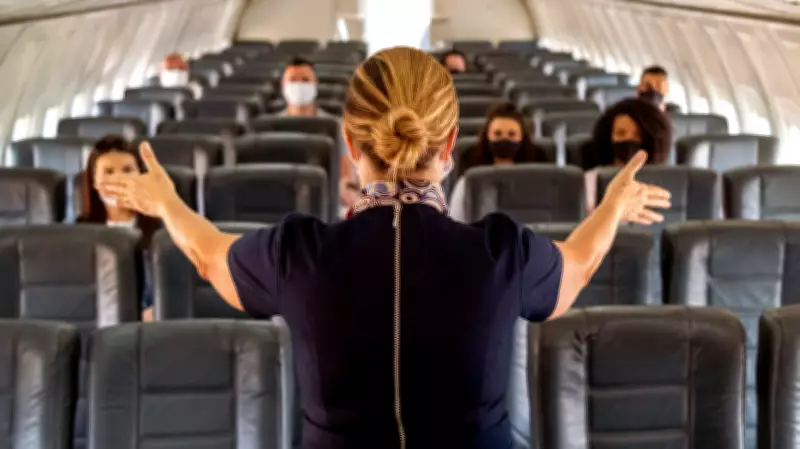
In 2025, pop icon Britney Spears sparked headlines after an incident on a flight from Cabo San Lucas to Los Angeles. Reports indicated she smoked illegally onboard, admitted to drinking vodka, and complained that a flight attendant "put the seatbelt on me and invaded my space." This episode raises a critical question: what are flight attendants trained to do when faced with unruly passengers? What actions can they take, and what are their limitations? To uncover the answers, we interviewed experienced flight attendants about their strategies for managing disruptive behavior both in the air and on the ground, offering insights to improve future flights for everyone.
Removing Passengers Before Takeoff
When a flight is still on the ground, handling an unruly passenger becomes more straightforward, as they can be removed from the aircraft. Viral videos often show belligerent individuals escorted off planes by law enforcement at the gate—a tense but necessary measure. "It's not up to us, the flight attendants, if we want to remove someone," explained Coraline C., a flight attendant with seven years of domestic experience who requested anonymity for privacy. "We must communicate with the captain about the situation, and they make the final decision. While they generally consider our input, the ultimate authority isn't in our hands."
Coraline noted that intoxicated passengers who become combative or lose control are commonly removed, but other scenarios also apply. "During the COVID-19 pandemic, individuals refusing to wear masks were taken off planes. Even today, passengers who won't stop using their phones once the plane stops moving face removal," she added. This policy can extend to families with children who cry non-stop or throw tantrums, though they typically receive more leeway due to the natural behavior of infants. However, if disruptions severely affect other passengers, especially on long-haul flights, removal may become necessary.

Verbal De-escalation Techniques
Once a flight is airborne, flight attendants are trained to first attempt verbal de-escalation with angry or misbehaving passengers. "I always try to validate their feelings, even if they seem unreasonable to me, and let them know I'm listening, as most people just want to be heard," said Coraline. "Often, if a passenger dislikes one crew member, we can send another flight attendant to speak with them, aiming to build a connection." During this process, attendants ask probing questions to uncover the root cause of the upset, such as whether alcohol, prescription drugs, or illegal substances are involved, according to a California-based flight attendant with 21 years of experience.
Involving Pilots and Law Enforcement
If de-escalation efforts fail, flight attendants can escalate the situation by involving the pilot. "This generally leads to airline officials or police meeting the plane upon arrival at the destination, or if it worsens, we may divert to the nearest airport," Coraline explained. In cases where passengers become physical or violent, flight attendants are trained in self-defense techniques to protect themselves and others. However, they are advised to avoid making assumptions, threatening passengers, or using physical force unless absolutely necessary, as noted by Leesa L., a flight attendant for a major commercial airline who also requested anonymity.
Limited Resources and Safety Priorities
Flight attendants must often improvise with limited resources during incidents. "We aren't supposed to duct-tape passengers to seats, that's for sure, but we're extremely limited in what we have, so we make do with what's available," Coraline said. The primary goal is to prevent situations from turning physical and avoid involving additional authorities. Ultimately, flight attendants emphasize that their main priority is the safety of everyone onboard. "Every rule we ask you to follow exists because it has saved lives or prevented accidents in the past," one attendant told HuffPost.

Consequences for Non-Compliance
Rule-breakers who ignore instructions, whether on land or in the air, face potential consequences. "Consequences can range from a slap on the wrist to arrest, fines by the FAA, and bans from flying with that airline," Leesa stated. Listening to flight attendants is crucial, as their protocols are designed to maintain order and security. The original version of this story was published on HuffPost at an earlier date, highlighting ongoing challenges in aviation safety and passenger management.