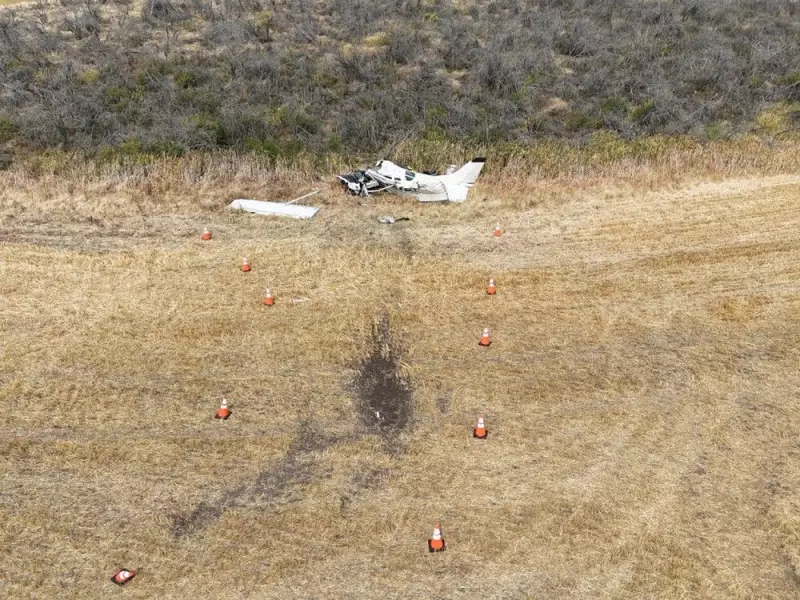
A tragic plane crash near Lloydminster that claimed two lives last year was preceded by an aerodynamic stall as the aircraft executed a sharp turn at low altitude, according to a new investigation report.
Investigation Details of the Fatal Flight
The Transportation Safety Board of Canada (TSB) released its findings on January 7, detailing the events of September 8, 2024. The aircraft, a Cessna U206F operated by KBM Forestry Consultants Inc., had departed from a Kindersley airport. Its mission was part of a multi-day operation to photograph and inspect power lines in an area southeast of the Lloydminster airport.
A two-person crew was on board, with duties switching between piloting and observing. The individual who flew the morning shift was operating the cameras during the afternoon when the incident occurred.

The Moment of the Stall and Crash
While conducting the aerial inspection work, the pilot initiated a right turn at an extremely low height, estimated between 200 to 300 feet above ground. The TSB report states that during this maneuver, the aircraft stalled.
"During the turn, the aircraft stalled and its bank angle to the right increased," the report explains. "While the aircraft was descending at a rate of at least 3000 feet per minute, it began to roll to the left toward a wings-level attitude."
The sequence was devastatingly fast. Just three seconds after the stall began, the aircraft impacted the terrain. There was no fire before or after the crash, but the aircraft was destroyed.
Aftermath and Critical Safety Message
The pilot was killed instantly in the crash. The observer, who was seriously injured, succumbed to their injuries three days later.
The TSB defines an aerodynamic stall as a loss of lift and increase in drag that occurs when an aircraft flies at an angle too steep to maintain lift. This leads to an "almost complete loss of control" and a rapid, uncontrollable descent.
The report concludes with a direct safety message for all pilots, particularly those engaged in similar low-altitude inspection work: "When required to conduct steep turns at low height, pilots need to be cautious given that there may be insufficient height to recover from an inadvertent stall." This warning underscores the heightened risk associated with aggressive maneuvers close to the ground, where margins for error are virtually nonexistent.