Montreal's Pothole Problem Intensifies Amid Winter Weather Fluctuations
Montreal residents are facing a familiar seasonal challenge as potholes proliferate across the city's roadways, creating hazardous driving conditions and testing municipal maintenance efforts. The phenomenon, known locally as "nid-de-poule" or bird's nest, has become as much a part of Montreal's identity as its famous bagels, according to local observers.
The Science Behind Seasonal Road Damage
Potholes emerge as a direct consequence of Montreal's volatile winter weather patterns. When temperatures fluctuate between freezing and thawing cycles, water seeps into existing cracks in pavement surfaces. As this water freezes and expands, it creates pressure that breaks apart road materials from within. Subsequent thaws leave behind voids that collapse under vehicle traffic, forming the characteristic craters that plague drivers each winter.
This natural process means that as spring approaches, the situation typically worsens before it improves. The current conditions serve as cold comfort to Montrealers navigating increasingly treacherous road networks.

Current Weather Conditions Exacerbate Infrastructure Challenges
Recent meteorological data reveals challenging conditions for both roads and residents. Wednesday brought temperatures dropping to minus-5 Celsius in Montreal, with wind chill factors making it feel closer to minus-14 Celsius. Evening forecasts predicted possible flurries with overnight lows reaching minus-12 Celsius and wind chill values plunging to minus-18 Celsius.
These temperature extremes create the perfect environment for pothole formation, as roads experience repeated freeze-thaw cycles that accelerate deterioration.
Air Quality Concerns Compound Winter Challenges
Beyond road conditions, Environment Canada has issued smog alerts for several Quebec regions including parts of the lower Laurentians, Shawinigan, and Trois-Rivières areas. Officials attribute these air quality concerns primarily to wood smoke from residential heating during cold periods.
"In Quebec, wood heating represents the primary source of fine particles contributing to winter smog conditions," Environment Canada's advisory states. "This residential activity generates more particulate pollution than industrial operations or transportation sectors during colder months."
Municipal Response and Community Impact
The pothole situation has become significant enough to affect even Montreal's leadership. Mayor Soraya Martinez Ferrada recently experienced firsthand how deteriorating road conditions can disrupt schedules and create inconveniences for all residents.
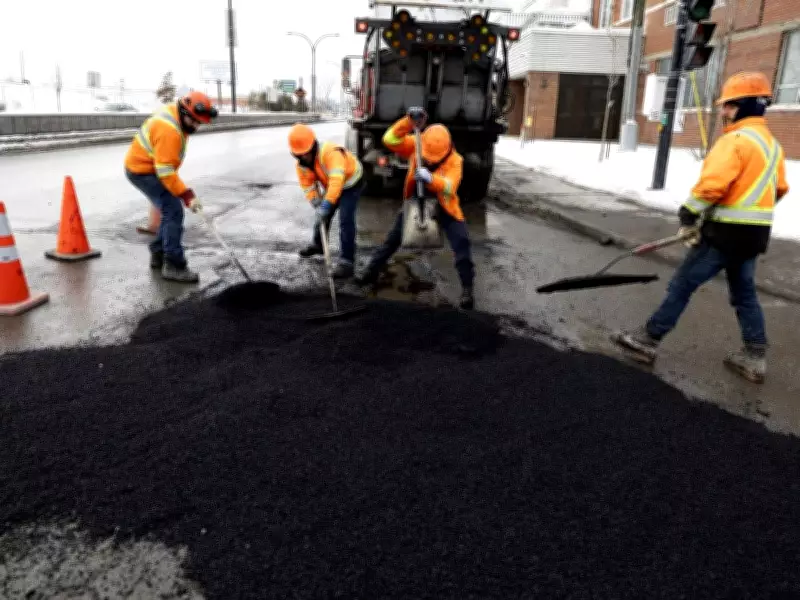
City maintenance crews have been observed addressing particularly problematic areas, such as the intersection of Dickson and Notre-Dame Streets, where workers filled extensive pothole clusters. However, the scale of the challenge requires continuous attention as new road imperfections emerge daily.
Local columnist Allison Hanes has highlighted the infrastructure issue, noting that Montreal's reputation for challenging road conditions now rivals its culinary fame. The comparison underscores how municipal infrastructure has become a defining characteristic of the city's winter experience.
As winter continues, Montrealers navigate a dual challenge of hazardous road conditions and air quality concerns, with both issues stemming from seasonal weather patterns that test the city's infrastructure and environmental management systems.