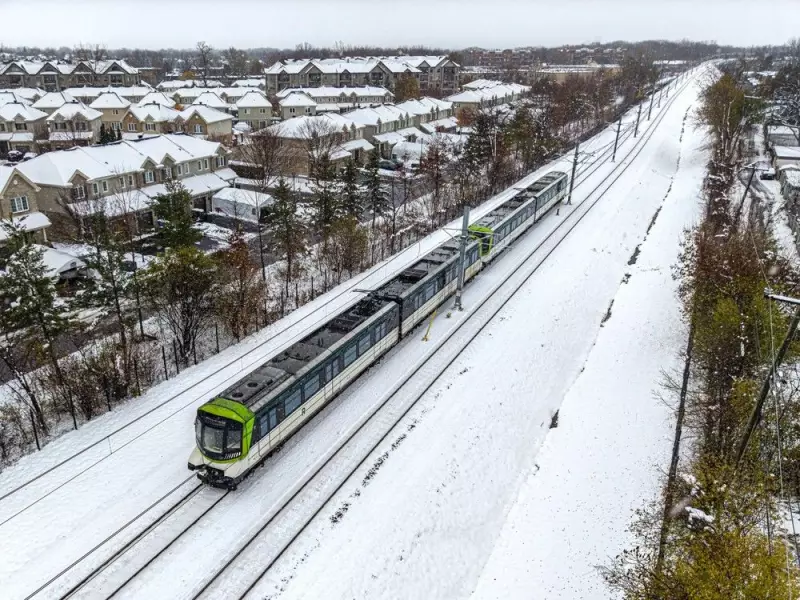
Montreal's REM Reliability Crisis: Growing Pains or Broken Promises?
The Réseau express métropolitain (REM) in Montreal is facing significant reliability challenges since the November opening of its Deux-Montagnes branch, with operators scrambling to address frequent breakdowns and delays that have plagued the new transit network.
Persistent Service Disruptions
Despite initial promises of reliable service, REM operators acknowledge falling short of expectations. According to transit advocacy group Trajectoire Québec, the network has experienced at least one breakdown or significant slowdown of 20 minutes or more every four days on average since the new branch began operations. Passengers report poor communication during service interruptions and frustratingly slow deployment of shuttle buses when trains are out of service.
Florence Junca-Adenot, an associate professor in urban planning at UQAM and former Montreal-area transit executive, emphasizes the broader implications: "This doesn't help the global idea of public transit because it gives an image of public transit that doesn't work, while all the older networks seem to work well. At one point, people will just get fed up and take their cars. And then we all lose."

Winter Weather Challenges
While acknowledging that this winter has presented particularly harsh conditions, Junca-Adenot notes that REM breakdowns remain far too common. The situation mirrors challenges faced by other new light-rail projects across Canada, including Toronto's Finch West LRT and Ottawa's LRT system, both of which have experienced similar reliability issues.
Matti Siemiatycki, professor of geography and planning and director of the Infrastructure Institute at the University of Toronto, questions whether planners adequately accounted for Canadian winters: "It has been an ongoing discussion about whether the people who plan these systems knew that we have winter in Canada. At this point, we should be ready for it."
Communication and Accountability Concerns
Critics highlight poor communication practices during service disruptions as a significant concern. Trajectoire Québec has called for REM operators to adopt messaging standards similar to those used by the STM during métro breakdowns, including providing estimated restoration times. Junca-Adenot emphasizes that better communication and faster shuttle bus deployment are essential for maintaining passenger confidence.
"People need to have the impression that they are being taken care of," she explains. "Because if they're going to be waiting outside in the cold and there is no communication, they have the impression that they are left to fend for themselves."
Broader Implications for Transit Development
The REM's reliability issues extend beyond immediate passenger inconvenience. Siemiatycki warns that continued problems could undermine public confidence in major transit investments: "When people lose confidence that they can get to their jobs on these new systems that we spent a fortune on, it starts to chip away at the support needed for these transformative projects."
Ahmed El-Geneidy, professor and coordinator of Transportation Research at McGill (TRAM), suggests some issues may represent expected growing pains for a new system: "Don't expect a brand-new system not to have hiccups. Once they open the Anse-à-l'Orme branch, they will have other hiccups because they will see new challenges."
Path Forward and Accountability
Despite current challenges, experts express cautious optimism about the REM's future reliability. However, they emphasize that operators must take concrete steps to address current issues. Junca-Adenot calls for a formal public explanation from REM operators outlining specific problems and concrete improvement plans.
El-Geneidy acknowledges the Caisse de dépôt et placement du Québec, which owns the REM, must be held accountable for resolving these reliability challenges: "It is a problem and they have to fix it. Let's wait and see, but we still have to hold them accountable to fix these things."

The REM's performance in coming months will be crucial for determining whether current issues represent temporary growing pains or more fundamental problems with Montreal's ambitious $9.2-billion transit investment.