A new chapter in one of aviation's most enduring mysteries has begun, as a deep-sea search operation for the missing Malaysia Airlines Flight MH370 got underway. The mission, which commenced on December 31, 2025, is focusing its efforts on the vast and remote expanse of the southern Indian Ocean off the coast of Australia.
The Latest Search Operation
This latest initiative represents a renewed effort to locate the wreckage of the Boeing 777, which vanished on March 8, 2014, with 239 people on board. The aircraft disappeared from radar screens during a flight from Kuala Lumpur to Beijing, sparking an international search of unprecedented scale and cost. The new search is deploying advanced underwater technology to scour a previously identified area of interest, where satellite data and drift analysis suggest the plane may have ended its flight.
The operation draws on lessons learned from previous searches, including a massive underwater survey that ended in 2017. Only a few confirmed pieces of debris, discovered on western Indian Ocean shores, have ever been recovered from the aircraft. The families of those on board have waited for over a decade for definitive answers regarding the fate of their loved ones.

A History of Intensive Efforts
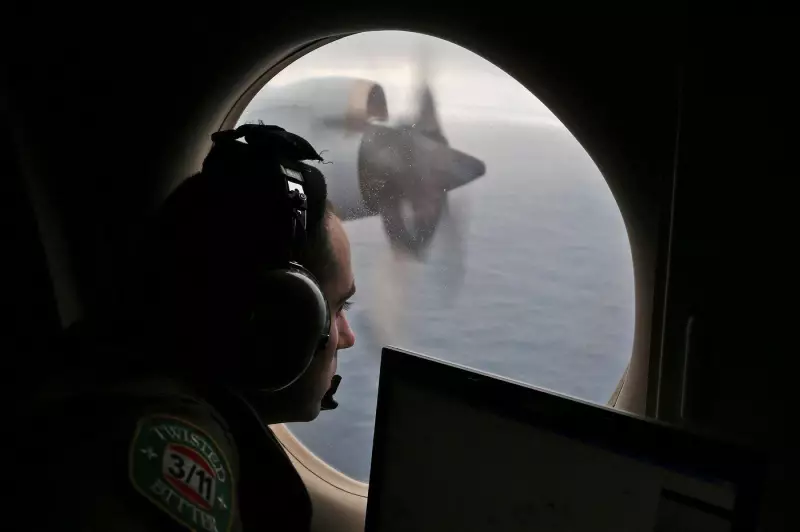
The initial search phase, depicted in archival imagery, involved surface and aerial sweeps. A poignant photo from March 22, 2014, shows flight officer Rayan Gharazeddine scanning the waters from a Royal Australian Air Force AP-3C Orion aircraft. That visual symbolizes the immense challenge of searching an ocean area characterized by extreme depths, powerful currents, and a rugged seabed.
Subsequent deep-water missions utilized sophisticated sonar systems and autonomous underwater vehicles to map the seafloor. While these efforts refined the understanding of the oceanography in the search zone, the main wreckage site has remained elusive. The decision to launch this new search follows continued analysis of satellite communications data and ongoing advocacy from next of kin.
The Enduring Mystery and Its Impact
The disappearance of MH370 led to significant changes in global aviation tracking protocols. New standards now require commercial aircraft to report their position more frequently over open ocean, a direct response to the difficulties faced in tracing the flight's final hours. The case has also fueled countless theories, from technical failures to deliberate human action, though none have been conclusively proven.
The psychological toll on the families of the passengers and crew has been immense, compounded by the lack of physical evidence and closure. This new search offers a fragile hope that modern technology might finally solve the puzzle. The success of the mission hinges on the precise definition of the search area and the capability of the equipment to withstand the harsh deep-sea environment.
As 2026 begins, the world watches again as experts venture into one of the planet's most isolated regions, seeking to bring an end to a mystery that has captivated and confounded the public for over eleven years.