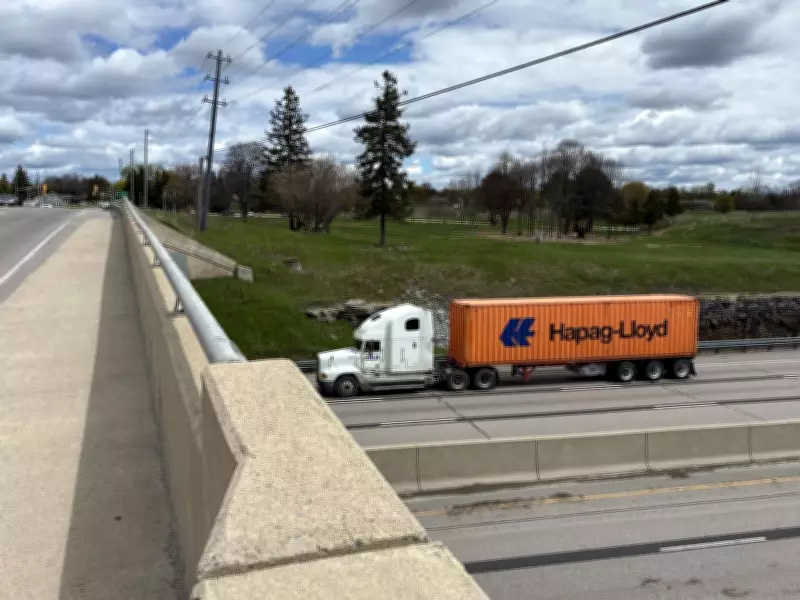
If it feels like Ontario's roads and highways are less safe than they used to be, that is because they are. Two unrelated announcements from government agencies have confirmed this troubling reality. The first involved charges for bribery to obtain G-class driver's licenses, and the second was an audit of commercial truck driving schools that exposed significant gaps in the system.
Audit Reveals Widespread Failures
A new audit of Ontario's entry-level training colleges for truck driving has left many feeling uneasy. According to the audit, many students are not being taught the basics of driving. Between 2019 and 2024, the audit found that three registered private career colleges had falsified or altered student training records, four did not have records to demonstrate that some or all of their students had completed required training components, and three did not teach all required components.
The audit used undercover students to assess driving schools regulated by the province. In two cases, students received only 59.5 and 81 hours of training instead of the required 103.5 hours. Two undercover students were not taught key truck-driving elements such as left turns at major intersections, reverse parking, and emergency stopping.

Safety Risks on the Road
These measures are in place to ensure drivers know what they are doing on the road. Not following protocols can have real-life consequences. Auditor General Shelley Spence wrote in her report, "Without an effective process in place to enforce compliance with all mandatory training, these drivers continue to operate. This poses a safety risk for all drivers on Ontario's roads." Commercial trucks account for just 3% of all vehicles on the road but are involved in 12% of all fatal collisions, the report found.
Inter-Ministry Communication Failures
The audit also identified problems between competing ministries. While the Ministry of Colleges and Universities was responsible for inspecting schools training drivers, they did not routinely share inspection reports with the Ministry of Transportation, which could enact enforcement measures against schools. Some schools provided incomplete training, while others used unqualified instructors. The bottom line is that some people transporting goods in large containers on Ontario's highways were given qualifications they should not have received, putting everyone at risk.
Impact of License Waiting Period
One major factor uncovered by the audit was the wait time between obtaining a Class-G license (general driver's license) and a Class-A license (truck driving license). Drivers who waited between one and two years were 6% less likely to be involved in first-year at-fault collisions, and those who waited between two and three years were 41% less likely, compared to those who upgraded within a year.
License Fraud on the Rise
Earlier this year, several people were charged with fraud related to commercial truck-driving operations. Now, more individuals are being charged in relation to obtaining Class-G licenses, which the audit showed can lead to bad outcomes for truck-driving licenses. Before the pandemic, Ontario had fewer than 100 schools training truck drivers. Truck drivers were deemed an essential service, but now there are more than 200 schools, and not all are playing by the rules.
Government Response
Ontario clearly has a problem, and Transportation Minister Prabmeet Sarkaria needs to get a handle on it. "We have zero tolerance for any of those bad actors," Sarkaria said in response to the audit. He also pointed to legislation passed last year that requires a mandatory six-month window between obtaining a Class-G and Class-A license, as well as stepped-up inspections of schools. Whether any of this will be enough remains to be seen. In the meantime, Ontario has an unknown number of drivers on the road who probably should not be there, all thanks to holes in the system.