Toronto's $3-Billion Waterfront LRT Aims to Transform City's Lakefront District
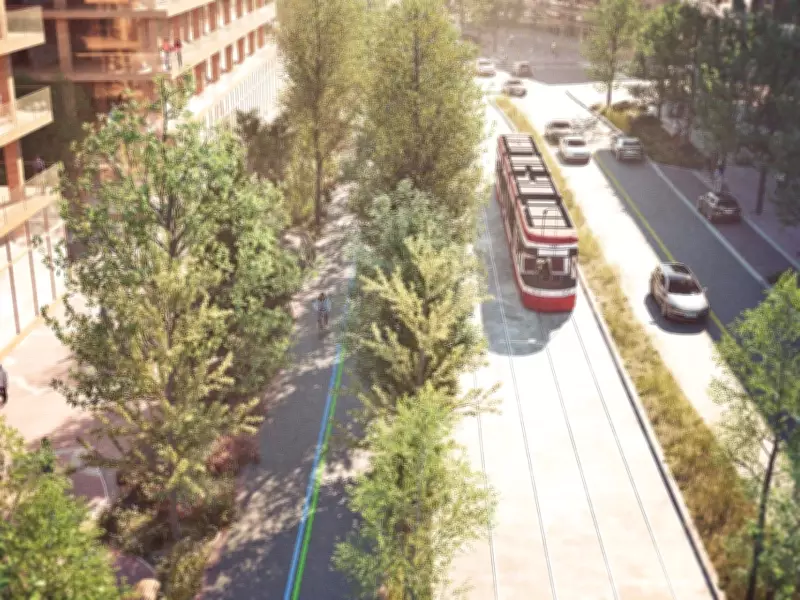
Listening to Tim Kocur discuss the new LRT line, one begins to feel that Toronto's waterfront is finally, truly coming together. Kocur, the executive director of the Waterfront BIA, describes the transit line as "of existential importance" for the eastern half of Queens Quay. He envisions that within a decade, Toronto's lakefront district will be world-class, with commerce and entertainment stretching continuously from Ontario Place in the west to the Port Lands near the mouth of the Don River.
A Vision for a Connected Waterfront
"The real sign of a great waterfront is usually that they have a continuous water's edge walk," Kocur said, citing examples like Baltimore or Sydney, Australia. "We are getting there." Hearing him talk about the Waterfront East LRT project makes the idea of spending $3 billion for 3.8 kilometers of rail seem less like an extravagance and more like a strategic investment.
"Once it's all built out, it's gonna be a 10-km waterfront-wide experience," Kocur explained, emphasizing that it will transform what are currently disconnected neighborhoods near Lake Ontario into a cohesive destination. "If people see the waterfront as a place where they can go for three straight days and do different things each day, that's what you can use to position Toronto as a waterfront city to the world."

Securing Funding and Project Timeline
The LRT line has been in planning for years, and it will be many more before completion. However, on Monday, the city secured crucial federal and provincial funding for the project. This is in addition to the $1 billion the city will contribute to laying rails from Union Station along Queens Quay to Cherry Street, then down Commissioners Street.
The city anticipates the line will be finished in the early 2030s, with the project rolling out in phases. While there is no firm timeline yet, City Council will receive updates as work progresses. City Hall declined to make a representative available for an interview but confirmed these details in a statement to the Toronto Sun.
Economic and Community Impact
City Hall is promoting the $3-billion project as an investment that extends far beyond easing commutes and reducing gridlock. It is expected to enable the creation of 75,000 new homes, transforming Toronto's eastern waterfront. Projections indicate it will serve 50,000 daily riders, create 100,000 jobs, and generate $13.2 billion in economic value, according to a City of Toronto press release.
Michael Bethke, president of the East Waterfront Community Association, is a strong advocate for the LRT's potential to link the city with Lake Ontario. "This is an investment not just in our area," he said. "I can see that it's going to free up an awful lot of traffic. It's got a great plan for the public realm. It's gonna look absolutely gorgeous."
Bethke also expressed relief that the transit line, long just an idea in city documents, is moving forward. Queens Quay has historically centered around condos, with scarce parking. Many new waterfront homes are in condos with fewer parking spaces than typical in Toronto, making transit essential.
Integration with Existing Infrastructure
Kocur highlighted that the LRT line will integrate with the existing Queens Quay streetcar route west of Union Station. Future residents of the Port Lands will be able to travel to Billy Bishop airport, Exhibition Place, or the western half of the TTC's Ontario line without transfers.
However, the streetcar is currently an afterthought at Union Station, and increased passengers could overload the limited space. Addressing this requires expensive, complex construction within the station, contributing to the high cost of the project.
"They've made a decision here, the TTC, that the best way to have this transit line function when it gets expanded is to continue having people go directly in and out, and only have to get on and get off once at Union Station," Kocur said. "It's basically being built around Union Station, which of course is the biggest transit hub in the country. That's the right thing to do. It's hard to argue."

Focus on Ookwemin Minising
A key element of the city's eastern waterfront strategy is the redevelopment of what was formerly known as Villiers Island. In 2024, Mayor Olivia Chow rebranded it as Ookwemin Minising. The city often refers to this area, with its industrial history, as the waterfront's "new island." The LRT line is set to end in a loop on Ookwemin Minising, envisioned as a mixed-use neighborhood.
Bethke praised the island's destination green space, Biidaasige Park, which opened last summer. Kocur emphasized that the LRT is just one component of efforts to better connect the east waterfront with the rest of the city. For instance, a striking pedestrian bridge is expected to link Parliament Street with the new island by 2028.
Construction Challenges and Optimism
Kocur mentioned that construction could begin as soon as this summer. Torontonians familiar with disruptive rail projects on Finch or St. Clair Avenues, or the Eglinton Crosstown, may relate. The waterfront LRT's unique geography, with water to the south and no streets, makes avoiding construction impacts challenging.
Bethke noted that with ongoing property development, the next few years will be "an interesting time" for Queens Quay. "It's great news," Kocur said, "but then we immediately have to think, wow, if the construction starts soon, how is that going to be mitigated? How are the businesses still going to be successful?"
He added, "We want to be optimistic. The city has, hopefully, learned a lot about how to do this construction through Queens Quay West 10 years ago, through Eglinton, through Finch."
Once completed, Kocur hopes the waterfront will be viewed differently, even by those who rarely use transit. "Once this waterfront transit is built out, 7-km wide, for someone from Toronto, we're hoping that they see the waterfront as a place where they can visit multiple different areas of it within one quick transit trip," he said. "We're hoping that they'll go to something at the Harbourfront Centre and then maybe go for lunch on the eastern waterfront, and then on the way home, you could even go to one of the new things that's going to be at Ontario Place."
"If we can see people spending a day on the waterfront in three different parts of the waterfront and using this transit line to get back and forth, like, that's going to be the real win," he concluded.