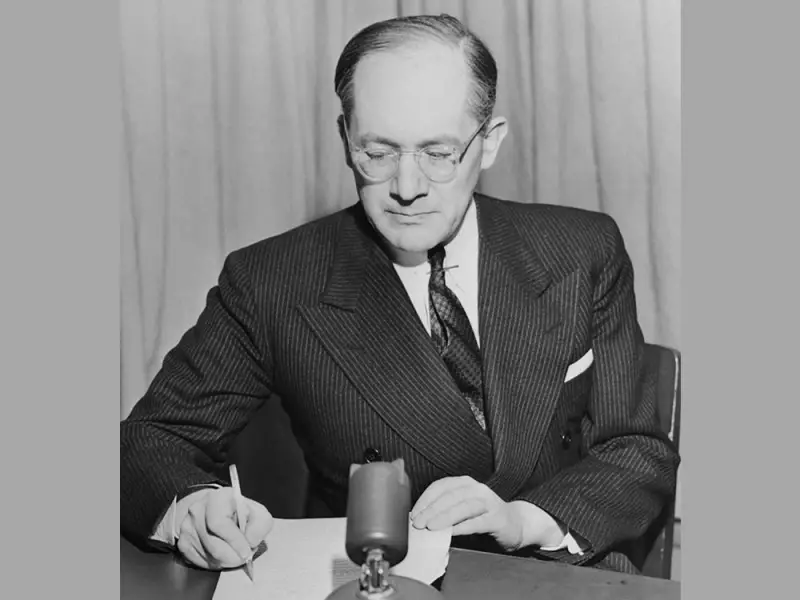
The legacy of Raphael Lemkin, the international lawyer who created the term "genocide," has become the center of a fierce international dispute. His family members and Jewish leaders are now publicly challenging an American institute that bears his name, accusing it of betraying the very principles Lemkin championed throughout his life.
Family Confronts Institute Over Political Stance
Joseph Lemkin, a cousin of the renowned scholar, expressed profound disappointment with the Lemkin Institute for Genocide Prevention's recent statements. "They seem to, what's the word, be apologetic for what Hamas has done," he told the National Post. "This is what Raphael Lemkin would stand for? Being an apologist for Hamas? Attacking Israel for defending itself?"
The conflict intensified when the European Jewish Association (EJA) sent a formal letter to U.S. federal authorities on October 31, 2025. The organization urged investigators to examine whether the institute's actions and statements violate its non-profit status requirements. According to the EJA, the Pennsylvania-based organization has "taken openly political positions" despite being legally mandated to remain non-partisan and apolitical.

Questioning Institutional Legitimacy
Joseph Lemkin didn't mince words when characterizing the institute's activities. "This isn't really an honest academic institute," he stated. "It comes off as more of a political organization than any sort of legit research organization."
The Lemkin Institute for Genocide Prevention was established in August 2021 as a non-profit organization. A significant point of contention revealed by the EJA is that the institute used Raphael Lemkin's name without obtaining permission from his surviving family members.
Raphael Lemkin's personal history adds profound weight to the current controversy. The Polish-Jewish lawyer survived the Holocaust but lost 50 relatives during the genocide. His groundbreaking work in 1944 introduced the world to the concept of genocide by combining the Greek word "genos" (meaning race or tribe) with the Latin "cide" (meaning killing). This terminology first appeared in his influential book, Axis Rule in Occupied Europe: Laws of Occupation, Analysis of Government, Proposals for Redress.
Contrasting Visions of Prevention
Lemkin's post-war advocacy fundamentally changed international law and human rights protection. His relentless efforts led to the establishment of genocide as an international crime through the 1948 UN Genocide Convention, creating a permanent framework for addressing mass violence and seeking justice for victims.
The institute that now bears his name describes itself as "nonpartisan" on its website and claims to work globally promoting grassroots genocide prevention. However, its public communications tell a different story. In a March 2025 "Letter to the American People," the organization made striking political statements, including references to "an authoritarian coup against the U.S. Constitutional order" and allegations of "genocidal thinking of many conservatives and evangelicals."
The institute's website coverage extends beyond the Israeli-Palestinian conflict to include trans issues and conflicts in Sudan, Syria, Ukraine, and other global hotspots. This broad focus, combined with its strongly worded political commentary, has raised questions about whether the organization has strayed from Lemkin's original vision and academic rigor.
As the controversy continues to unfold, the fundamental question remains whether an institution dedicated to preventing genocide can effectively fulfill its mission while maintaining the political neutrality that Raphael Lemkin's family and legacy advocates insist is essential.