New Research Overturns Historical Understanding of Battle That Ended Anglo-Saxon Rule
In a stunning development that is set to rewrite history books, a comprehensive new study has fundamentally challenged the established narrative surrounding the pivotal Battle of Hastings. This conflict, fought in 1066, resulted in the death of King Harold II—the last Anglo-Saxon monarch of England—and ushered in Norman rule under William the Conqueror. For centuries, historians have relied on traditional accounts, most notably the Bayeux Tapestry, to piece together the events of that fateful day. However, cutting-edge archaeological techniques combined with fresh analysis of medieval documents are now revealing a dramatically different story.
Reevaluating the Bayeux Tapestry and Historical Records
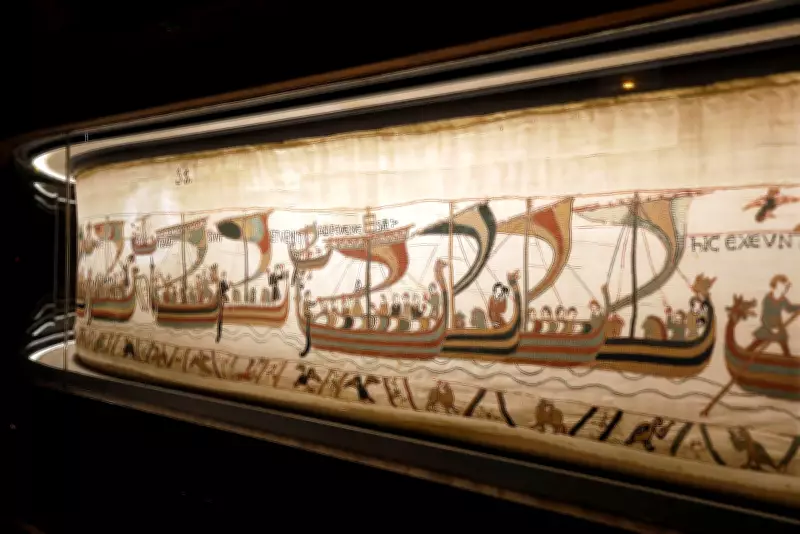
The Bayeux Tapestry, an embroidered cloth nearly 70 meters long created in the 11th century, has long been considered the primary visual record of the Norman Conquest. Housed at the Bayeux Museum in France, it depicts the events leading up to and including the Battle of Hastings with remarkable detail. Yet, researchers are now questioning its accuracy and biases. "The tapestry was commissioned by the Normans, essentially as propaganda to legitimize William's claim to the English throne," explains Dr. Eleanor Vance, lead archaeologist on the project. "Our findings suggest it may have deliberately obscured key aspects of the battle to present a more favorable version of events for the conquerors."
By employing advanced technologies such as ground-penetrating radar and isotopic analysis of battlefield remains, the research team has uncovered evidence that contradicts traditional timelines and troop movements. For instance, the study indicates that Harold's forces may have been better positioned and more strategically prepared than previously thought, challenging the notion of a disorganized Saxon defense. This revelation paints a picture of a much closer and more complex confrontation than the one-sided victory often portrayed in Norman sources.

Implications for Understanding Anglo-Saxon England's Demise
The implications of this research extend far beyond military history. By reexamining the battle that doomed the last Anglo-Saxon king, scholars are gaining new insights into the political and social structures of 11th-century England. "This isn't just about how Harold died or where the arrows flew," notes Professor Alistair Croft, a medieval historian involved in the study. "It's about understanding the resilience and sophistication of Anglo-Saxon governance, which may have been more robust than we've given it credit for. The Norman Conquest wasn't inevitable; it was the result of specific, contingent factors that this research helps to clarify."
Key findings from the study include:
- Evidence suggesting that Harold's army utilized terrain more effectively than historical accounts indicate, potentially prolonging the battle.
- Analysis of weapon fragments and armor indicating that Saxon forces had access to advanced metallurgy, contradicting assumptions about technological inferiority.
- New interpretations of chronicles that hint at internal divisions within the Norman camp, which may have influenced the battle's outcome.
These discoveries are forcing historians to reconsider not only the Battle of Hastings itself but also the broader narrative of the Norman Conquest as a straightforward takeover. Instead, the research points to a more nuanced process of conflict and adaptation, with lasting effects on English culture, language, and law.
A New Chapter in Historical Scholarship
Published in late March 2026, this groundbreaking study represents a significant leap forward in our understanding of one of history's most decisive battles. By integrating archaeological science with critical historiography, the researchers have opened up new avenues for exploring the past. Their work underscores the importance of continually questioning and testing historical assumptions, even those that seem firmly established.

As the academic community digests these findings, plans are already underway for further excavations and analyses at the Hastings site. The goal is to build an even more comprehensive picture of the events that reshaped England nearly a millennium ago. For now, this research stands as a powerful reminder that history is never truly settled—it is always subject to revision in light of new evidence and perspectives.