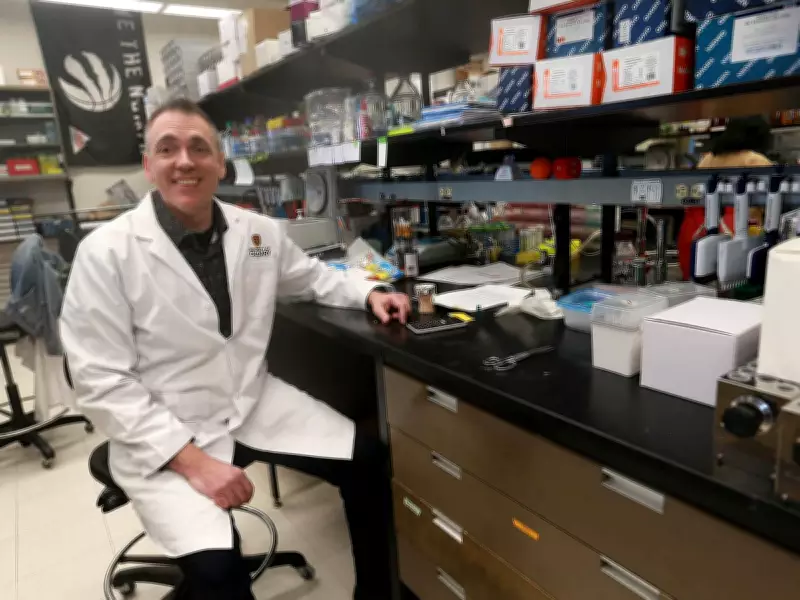
University of Calgary Scientist Secures $5.8 Million for Groundbreaking Biofilm Research Center
Dr. Joe Harrison, a prominent microbiologist at the University of Calgary, has been awarded a substantial $5.8 million grant from the Canada Foundation for Innovation (CFI) to establish the Canadian Centre for Biofilm Research. This facility will be the first of its kind in Canada, dedicated to studying microbial communities known as biofilms.
Understanding the Microscopic World of Biofilms
"Not all slime is bad," Dr. Harrison explains, describing biofilms as complex communities of bacteria and other microorganisms that adhere to surfaces and encase themselves in a protective, slime-like layer. These microbial formations are ubiquitous, existing everywhere from the human body to industrial environments.
The new research center will occupy a 3,500-square-foot laboratory space, housing approximately 40 to 50 researchers. It will be equipped with state-of-the-art technology, including a microbial molecular biology and genome-editing core, along with a suite of high-powered microscopes. This advanced infrastructure will enable scientists to delve deeper into the mechanisms of biofilm formation and function.

Tackling Critical Health and Industrial Challenges
Dr. Harrison emphasizes that understanding biofilms can help address a wide range of pressing issues. The research has significant implications for combating drug-resistant infections, particularly those associated with medical devices like implants and catheters. By developing new materials that resist bacterial colonization, researchers hope to prevent severe infections without relying on antibiotics.
"If we can find a way to defeat these things using principles of microbiology and ecology, that don't rely on antibiotics, then we can defeat these infections without the use of medicines," Harrison stated.
Beyond infections, the center will explore the connection between gut bacteria and mental health. Harrison's team has identified potential new bacterial species linked to conditions such as depression and is investigating the development of probiotics for therapeutic use.
Addressing Infrastructure Corrosion in Alberta
Biofilms also play a crucial role in industrial and environmental systems. In Alberta, a key focus is on the corrosion of metal infrastructure, especially within the energy sector. Harrison notes that biofilm-induced corrosion results in substantial financial losses, making this research particularly relevant for the region.
By studying how harmful biofilms develop, scientists aim to create improved pipe designs and new disinfectants to mitigate damage. This could lead to more durable infrastructure and reduced maintenance costs.
Harnessing Beneficial Biofilms
While some biofilms pose challenges, others are beneficial. Harrison points out that large biofilms are used in water treatment facilities to help clean water. "Using principles of biofilm microbiology, we can engineer those biofilms to do that job better," he explained.
The establishment of the Canadian Centre for Biofilm Research represents a significant step forward in microbial science. With its multidisciplinary approach, the center promises to yield innovative solutions for health, industry, and environmental sustainability, positioning the University of Calgary at the forefront of biofilm research.