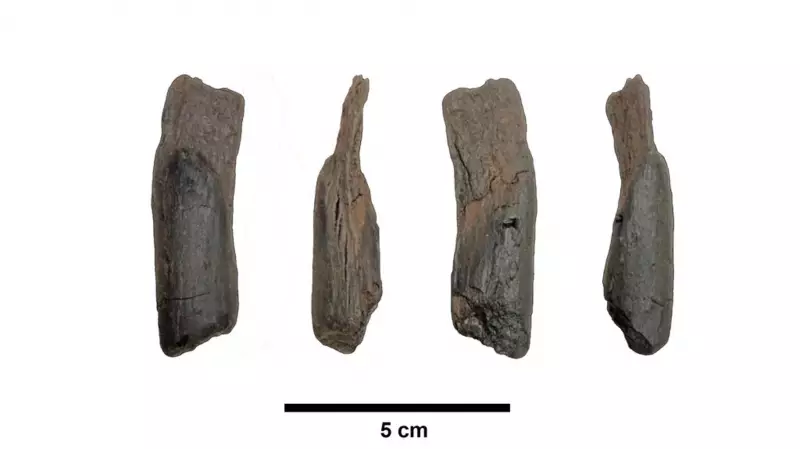
Groundbreaking Discovery: Oldest Wooden Tools Unearthed in Greece
In a remarkable archaeological find, two wooden artifacts discovered at a lake shore in Greece have been identified as the oldest wooden tools ever uncovered, dating back an astonishing 430,000 years. This discovery provides a rare window into the technological capabilities of early humans and their ancestors.
Ancient Artifacts Reveal Early Human Ingenuity
The two tools were found in Greece's Megalopolis basin, a site that has yielded numerous prehistoric remains over the years. One artifact is a slender stick measuring approximately 2 1/2 feet (80 centimeters) in length, which researchers believe may have been used for digging in mud or soil. The other is a smaller, handheld piece of wood from willow or poplar trees that presents more mystery—it might have served as a tool for shaping stone implements.
According to research published in the journal Proceedings of the National Academy of Sciences, these wooden tools offer invaluable evidence about early human technology. "I've always just been thrilled to be able to touch these objects," said study author Annemieke Milks from the University of Reading, expressing the profound connection researchers feel with these ancient artifacts.

Preservation Challenges and Scientific Significance
Wooden tools are exceptionally rare in the archaeological record because wood decomposes rapidly under normal conditions. These particular artifacts survived through extraordinary circumstances—likely buried quickly by sediment and preserved in a consistently wet environment over hundreds of millennia.
While scientists haven't directly dated the wooden tools themselves, the site where they were found is approximately 430,000 years old, providing strong evidence for their age. The Megalopolis basin has previously yielded other important finds, including stone tools and elephant bones with cut marks, suggesting it was a significant location for early human activity.
Mystery Surrounds the Toolmakers
One intriguing aspect of this discovery is that human remains haven't been found at the site, leaving researchers uncertain about exactly who created and used these tools. The possible makers include:
- Neanderthals
- Early human ancestors
- Other hominin species
Archaeologist Jarod Hutson from the Smithsonian National Museum of Natural History noted that while these tools might not appear immediately impressive to the untrained eye, their significance is profound. "It's difficult to get excited about these because they don't strike you immediately as wooden tools. And we don't know what they were used for," said Hutson, who was not involved in the study. He added that the site likely contains more archaeological treasures waiting to be discovered.
Context Within Ancient Wooden Tool Discoveries
These Greek artifacts join a small but significant collection of ancient wooden tools found around the world. Other notable examples include:
- A set of spears discovered in Germany
- 300,000-year-old Chinese digging sticks that may have been used for plant harvesting
Study author Katerina Harvati from the University of Tübingen emphasized the importance of this discovery in an email statement, noting that it provides "a rare look into the varied collection of tools used to survive" and offers a glimpse at a "little known aspect of the technology of early humans."
This groundbreaking find not only pushes back the timeline for wooden tool use but also highlights the sophisticated technological knowledge possessed by early human populations. The preservation of these delicate wooden artifacts against all odds allows modern researchers to better understand the daily lives, survival strategies, and innovative capabilities of our distant ancestors.