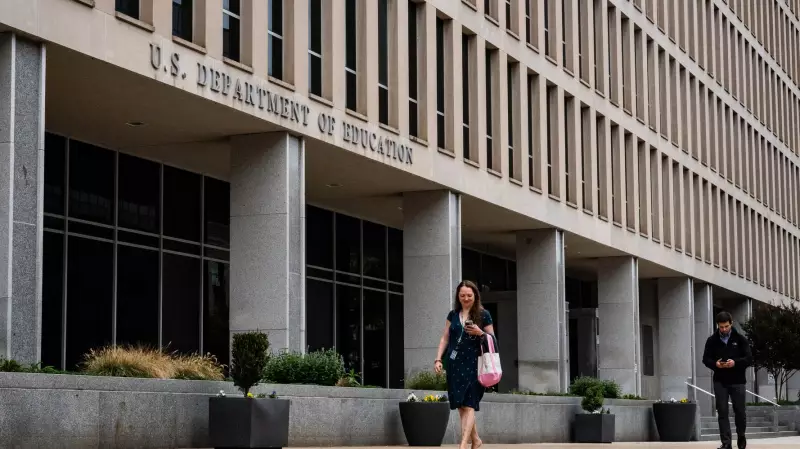
The Trump administration announced a significant restructuring of federal education programs on Tuesday, moving billions of dollars in funding and numerous departmental responsibilities to other government agencies. Education policy experts describe this move as an alarming escalation in what they characterize as a war on public education.
Major Program Transfers and Political Justification
Secretary of Education Linda McMahon framed the changes as necessary reform, stating in an official release that the administration is taking bold action to break up the federal education bureaucracy and return education to the states. She emphasized that cutting through Washington red tape represents an essential component of their ultimate mission to refocus education on students, families, and schools.
The Department of Education's website now shows six new agreements with other federal agencies that will begin administering critical functions. These transfers include workforce development programs, services for international students, and most notably, Title I funding for low-income schools across all fifty states.

The departments of Labor, Health and Human Services, and State will assume these new educational responsibilities. McMahon presented these agreements as beneficial for students and families who depend on federal education initiatives.
Expert Concerns and Potential Consequences
Education policy specialists, however, express serious reservations about the practical implications of these changes. Jon Valant, an education policy expert at the Brookings Institution, told HuffPost that he views the moves as part of a broader attack on public education.
They've discovered this absurd roundabout method of superficially transferring many of the department's duties, Valant explained. The ultimate consequence will likely include waste, inefficiency, errors, and significant frustration among those affected.
The timing and methodology of these transitions remain unclear, including whether experienced Education Department staff will transfer to their new agencies alongside the programs they currently manage. The Education Department has not responded to media inquiries seeking clarification on these operational details.
Valant suspects this represents just one phase in a larger strategy, noting that Republicans have sought to eliminate the Education Department since its establishment in 1980. During his campaign last year, Donald Trump repeatedly pledged to close the agency, and upon returning to the White House, he signed an executive order toward that objective.
Budget and Staffing Reductions
Although the president cannot unilaterally dismantle the Education Department without congressional approval, the administration has employed alternative methods to diminish its influence. These approaches have included implementing substantial staff reductions.
Before Trump's second term began, the Department of Education employed approximately 4,000 people and managed an $80 billion budget. Currently, nearly half of its workforce has been eliminated, and the administration has proposed cutting an additional $12 billion from its funding.
Despite conservative claims that the department promotes liberal ideology in schools, its primary responsibilities involve distributing funding to low-income schools, providing grants to rural educational institutions, and investigating civil rights complaints from students.
Title I Transfer Raises Particular Concerns
The relocation of Title I funding represents the most substantial program transfer. This initiative, which provided $18.6 billion in fiscal year 2023 to support schools serving low-income communities, will now fall under the Department of Labor's jurisdiction.
Valant questions the logic behind this specific transfer, noting that placing Title I oversight with Labor suggests schools exist solely for workforce preparation, which represents an incomplete understanding of educational institutions' broader societal role.

The scale difference between the transferred program and its new administrative home raises additional concerns. The Title I budget exceeds the Department of Labor's entire $14.6 billion budget, creating potential capacity issues according to Jared Bass, senior vice president of education at the Center for American Progress.
Bass compares the situation to Texas requesting that Delaware manage all its programs, highlighting the significant disparity in operational scale between the education program and its new administrative agency.
Practical Implementation Challenges
Advocates worry that staff at receiving agencies may lack the specialized knowledge required to effectively manage complex education programs. If they simply transfer Title I to existing Labor Department personnel, those staff will have no understanding of its operational requirements, Valant cautioned.
The redistribution of programs across multiple departments may also create bureaucratic complications for educators, who might need to navigate multiple agencies instead of working with a single department. Bass raises concerns about emergency situations like natural disasters or pandemics, where educators would need to approach six different agencies for relief funding instead of one.
While the Education Department has assured states that appropriated funding will continue uninterrupted, advocates fear important details may be overlooked during the transition. Valant expresses concern that understaffing or inadequate oversight might result in fewer officials monitoring proper fund utilization, potentially creating outcomes some administrators might find desirable.
Although future administrations could reverse these changes, Bass worries about potential damage even temporary modifications might cause. These programs affect real children, families, and students, he emphasized. They shouldn't serve as test subjects for federal education program experiments.