Traditional Japanese homes often follow the philosophy of wabi-sabi, an appreciation for imperfection and asymmetry. If elements are flawed, worn out or unbalanced, rather than scrambling to fix them, the theory goes, it is better to not only accept but celebrate a place's peccadillos. The pursuit of perfection, after all, is an exercise in futility and an express train to stress.
The couple who commissioned the Sakura Estate in Coquitlam back in 1963 were not known to be Japanese themselves, but they obviously embraced the wabi-sabi sentiment when envisioning their new mid-century modern home. Architect G. Douglas Wylie designed this residence for a couple keen on this aesthetic, creating a space that feels both timeless and deeply connected to its surroundings.
Architectural Philosophy and Design
“Its luxury comes from the materiality: it’s simple, reduced, peaceful,” says listing agent Trent Rodney, co-founder of West Coast Modern real estate agency. “Everything is locally sourced with a Japanese sensibility.” This sensibility starts with the property’s namesake, the Sakura, a 60-year-old cherry blossom tree that presides over the front yard. Adjacent to the entrance courtyard, the covered two-vehicle carport’s eaves curve up like a pagoda.

After passing through two motor court gates and continuing along a curved driveway, then over circular paving stones that look like lily pads, and across slate tiles, you pass underneath translucent tōrō lanterns, historically used to line and illuminate paths around Buddhist temples and shrines. Hand-set, locally sourced Squamish granite columns frame the entrance courtyard, and a skylight illuminates the pebbled pathway leading to the home’s double mahogany doors.
Integration with Landscape
“The architect for the Sakura, G. Douglas Wylie, collaborated with landscape architects Muirhead and Justice, both heavily influenced by Japanese planning,” says Rodney. “They approached the landscape and building as one, (which) are all linked to the Japanese origin hundreds of years ago.” This integration is evident throughout the property.
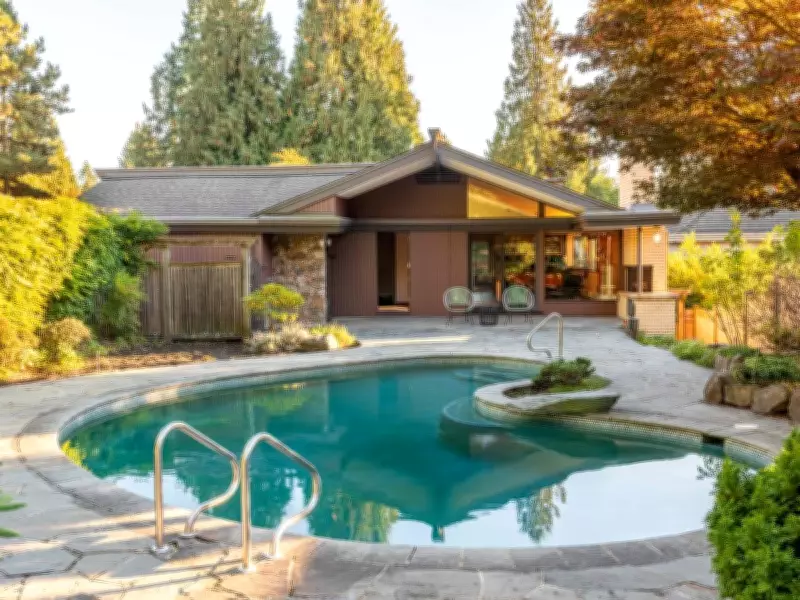
The California-style pool in the backyard was inspired by American landscape architect Thomas Church, characterized by the kidney-shaped design that blends with the surrounding landscape. “Granite monoliths, tall vertical stones near the pool and outdoor fireplace, function as sculptural landscape elements and reference traditional Japanese stone garden placement,” says Rodney. Japanese maples, cedar and wisteria ensure privacy, while a small balsam fir edging the pool evokes the bonsai and standing stones in many temple gardens.
Unique Features and Legacy
This residence is one of only two of Wylie’s known designed homes, the other being the Taylor residence in New Westminster. “Each element slows movement and creates a staged arrival in the entrance foyer that feels like you’ve entered the insides of a supersized Japanese lantern,” says Rodney. The home's design emphasizes a seamless flow between indoor and outdoor spaces, with large windows that frame the natural beauty outside.
The Sakura Estate stands as a testament to the enduring appeal of wabi-sabi in modern architecture, offering a sanctuary that celebrates imperfection and harmony with nature. Its thoughtful design and use of local materials make it a unique gem in Coquitlam's real estate landscape.