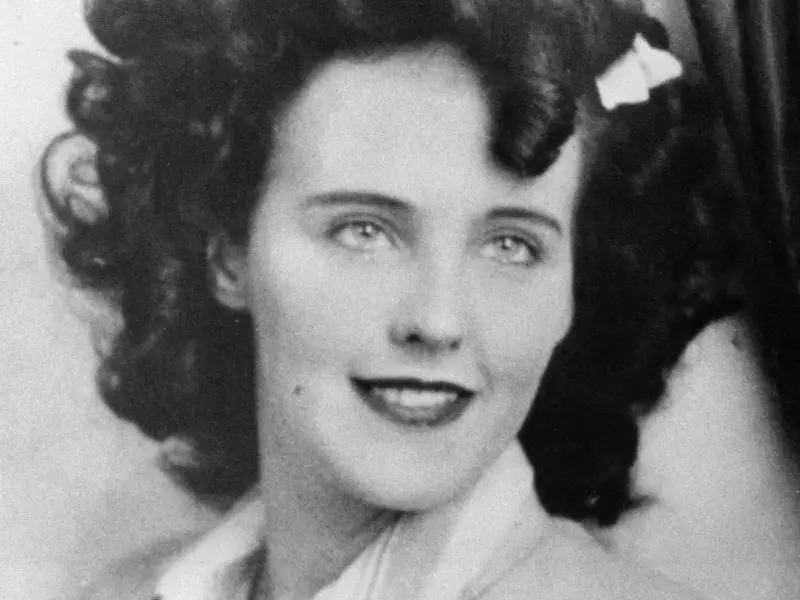
For decades, the brutal 1947 murder of Elizabeth Short, forever known as the Black Dahlia, has stood as America's most infamous unsolved crime. Now, a new book claims to have finally cracked the case, pointing the finger at a prime suspect who was on the Los Angeles Police Department's radar from the very beginning.
The Man Who Hunted the Hunter
Author and true crime television producer Eli Frankel details his findings in his new book, Sisters in Death: The Black Dahlia, The Prairie Heiress and Their Hunter. Frankel asserts that the killer was a man named Carl Balsiger, a figure he describes as a violent stalker with a history of brutal assaults against women.
"His name is Carl Balsiger," Frankel stated in an interview with the Toronto Sun. "And he was at the top of the LAPD's radar for the murder of Elizabeth Short." Frankel's investigation pieces together Short's final days and, crucially, links Balsiger to another gruesome murder that occurred six years earlier and 2,500 kilometres away in Kansas City.

A Chilling Pattern Emerges
The Kansas City victim was Leila Welsh, a popular and beautiful socialite who moved in the same high-society circles as Balsiger. In 1941, her mutilated body was discovered in her bedroom, bearing what Frankel describes as "strikingly similar mutilations" to those inflicted on Elizabeth Short in 1947.
Frankel became convinced of the connection after examining the evidence. "I was intrigued, and when he's questioned by police, you know he's lying, and the cops also think he's lying," he explained. "I think Balsiger killed both women." Balsiger's background as an avid hunter, Frankel argues, provided him with the specific skillset seen in the murders, which involved meticulous cutting and organ removal reminiscent of dressing a kill.
Institutional Obstacles and a Prime Suspect
Despite Balsiger being a prime suspect, Frankel claims the LAPD's investigation was hampered by a lack of cooperation from Kansas City police. The LAPD repeatedly requested the files on the Leila Welsh murder but were consistently rebuffed. Frankel suggests that Balsiger's wealthy and politically connected father in Kansas City may have influenced the lack of inter-agency cooperation.
Frankel also seeks to correct the historical record on Elizabeth Short herself, pushing back against sensationalized accounts that painted her as a promiscuous party-goer. "She was nothing at all like the myth that has been built up around her," Frankel said. "She had worked since she was 16... Her nights out were spent at CBS and NBC studios watching live radio plays. She did not sleep around."
Carl Balsiger lived a troubled life, according to Frankel's research, which included the suspicious drowning of his younger sister and the decapitation of his first wife in a car crash. He died in 1977, a squatter and alleged peeping tom in Kansas City, having never faced justice for the crimes Frankel attributes to him. For the author, this breakthrough transforms the Black Dahlia's story from a mere cautionary tale into a resolved, though tragic, chapter in true crime history.