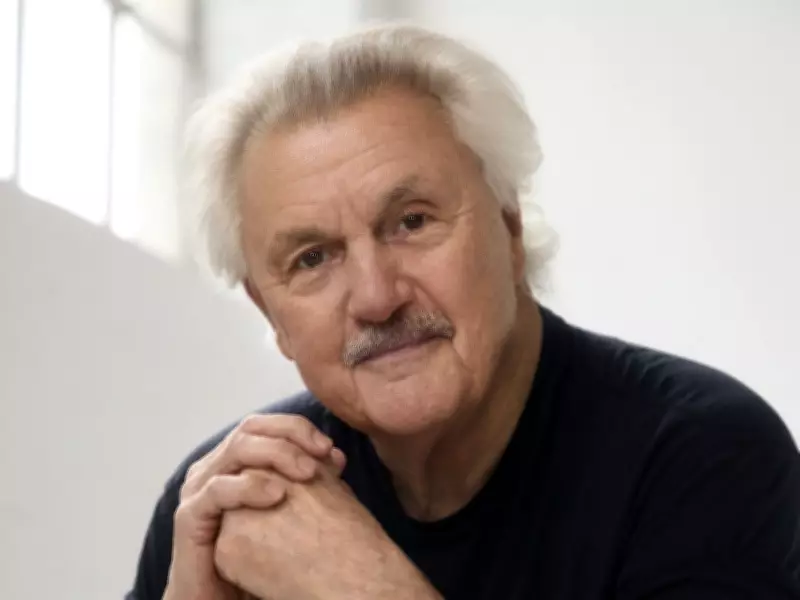
John Irving Opens Vancouver Jewish Book Festival with New Novel Queen Esther
When John Irving arrives in Vancouver this month to inaugurate the Jewish Book Festival, he will do so as a Canadian citizen, a long-term resident, and—as he notes with some amusement—a non-Jewish writer launching a festival dedicated to Jewish literature. The celebrated author, best known for expansive, heartfelt novels like The World According to Garp, A Prayer for Owen Meany, and The Cider House Rules, is now promoting his sixteenth novel, Queen Esther. In an exclusive conversation, the 83-year-old novelist explores family connections, lifelong friendships formed through sports, and the journey that led him to Queen Esther, a work deeply influenced by themes of Jewish identity, antisemitism, and Zionism.
A Non-Jewish Writer as Festival Opener
Q: You are opening the Jewish Book Festival in Vancouver. Have you participated in this event before?
A: I have certainly never attended the Jewish Book Festival, and I am deeply honored that, as someone who is not Jewish, I am serving as the opening act. I am absolutely thrilled by this opportunity.

Q: Is anything complicating your visit to Vancouver?
A: I have two grandchildren competing on the U.S. Ski Team, and my two days in Vancouver coincide with their halfpipe event in Livigno. If attendees notice my assistant and me checking our phones to find the CBC Gem stream, that is the reason. The timing could have been more convenient, but family comes first.
Family Ties and Cross-Border Connections
Q: You live part-time in Canada and are now a citizen. How do you view your family in the United States, especially in the current context?
A: Two of my three children reside in the United States, along with my four grandchildren and all my siblings. Despite having lived in Canada for years and being a full-time resident since 2014, I maintain more close friendships in the U.S. That is about when you form your most intimate bonds—during youth, on teams. The closeness shared with teammates is something I have not found an equivalent for among my fellow writers.
The Genesis of Queen Esther
Q: Did the character Esther emerge before the novel's engagement with Jewish identity and antisemitism?
A: Yes. All my novels exist as works in progress for more years than it takes me to write them. I am an ending-driven writer. I always know more about where and when my novels conclude than where they begin.
Q: What elements were predetermined with Queen Esther?
A: I knew from the outset that this would be a pro-Jewish, pro-Israel novel, just as I knew The Cider House Rules was an abortion-rights novel. My task was to craft a timeline for an empathetic Zionist and make it comprehensible that if you were Esther, you would likely feel the same way.
Q: Did you know her life in detail before starting the writing process?
A: I knew who she was, where she was born—Vienna, 1905—and that by age four, antisemitism would have already shaped her existence. I knew she would be orphaned and that she would possess a fierce determination to reclaim the Jewish life taken from her.
Q: The orphanage setting feels familiar to readers of your previous work.
A: Having written The Cider House Rules, I was familiar with an orphanage and a character who would strive to uncover her origins. I also knew I was creating the most unadoptable orphan Dr. Larch might ever encounter. That aspect fell into my hands naturally—it was a true gift.
Festival Details and Context
The 41st Annual JCC Jewish Book Festival features John Irving as its opening act, with the event scheduled for February 21 at 7:30 PM at the Norman & Annette Rothstein Theatre in the Jewish Community Centre. Tickets are priced at $36 for admission or $65 for a combined ticket and book package, available through Showpass. Irving's appearance highlights the festival's commitment to diverse literary voices, bridging cultural and religious boundaries through the power of storytelling.