From Nursing School to Bridgerton: A Journey of Asian Breast Representation
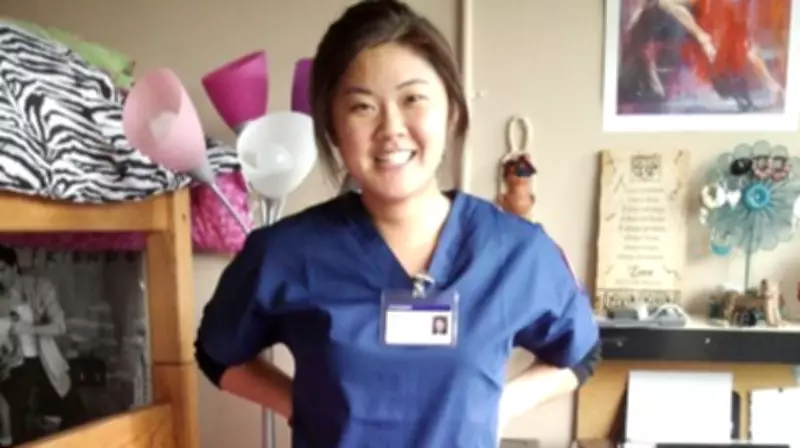
In 2012, the author proudly wore her Linfield College nursing school scrubs, a symbol of her dedication to healthcare. Months later, an unexpected moment unfolded when her roommates asked to see her breasts, sparking a personal exploration of identity and diversity. This story intertwines with the cultural phenomenon of Bridgerton, where the debut of Season 4 Part One drew 40 million viewers, including the author, eager to witness Korean actress Yerin Ha take center stage. As a Chinese American woman, she held one specific question: Will I see Ha’s breasts?
A Late-Night Conversation in Nursing School
One late night during nursing school in Portland, the author and four roommates engaged in a candid discussion about their breasts. They compiled a list of adjectives: ample, firm, soft, fibrous, pendulous, and pooly—a term for small-chested women like the author, who barely filled a B cup. Her bigger-chested suitemates explained that pooly described what happens when breasts lie on their backs, a sensation the author couldn’t relate to. The roommates expressed envy, citing discomforts like neck and back pain or the need for double sports bras during exercise.
The conversation shifted to shape, with one roommate humorously comparing her breasts to sagging traffic cones, even drawing them on a whiteboard. Amid laughter, the author noted her breasts looked different. Without hesitation, a roommate boldly asked, Can we see them? Shocked but in an environment where naked bodies were normalized through their studies, the author complied, removing her shirt and bra. Eight eyes locked onto her bare chest as she stood calmly, wondering about their thoughts and noticing one breast was slightly larger.

Reactions varied from Oh! to They’re perky and They’re small. This moment highlighted how her breasts differed from those of her white roommates, a realization rooted in childhood. One summer morning, she watched her adoptive mother, a white woman, get ready for work. Noticing their mismatched bodies, she pointed out that her mother’s C-cup breasts with pink nipples didn’t resemble her own. Her mother explained that ethnicity affects breast shape, size, and color, noting that as someone from China, the author would likely have small breasts with darker nipples and areolas.
The Search for Representation
That night in nursing school, the author’s roommates concluded they had never seen Asian breasts before. Besides her own, her younger adopted Chinese sister, and a Vietnamese woman in a delivery room, she hadn’t either. Despite a 13% Asian American population in her schools, privacy in locker rooms meant she rarely saw similar bodies. It wasn’t until age 26, in a changing room in China, that she saw breasts like hers—small, round, with quarter-sized brown areolas and nipples. This sparked joy and a sense of belonging, imagining a world where she wouldn’t stand out.
In contrast, her white roommates didn’t need to expose themselves because white women’s breasts were familiar, thanks to family and Hollywood’s abundance of white actresses. Growing up, Asian representation in leading roles was scarce, with examples like Lucy Liu in Charlie’s Angels, Zhang Ziyi in Memoirs of a Geisha, and Michelle Yeoh in Crouching Tiger Hidden Dragon, but none showed nudity on screen. Hollywood’s progress has been slow; in 2022, only 2.3% of theatrical movie leads and 6.5% of total roles were played by Asian actors.
Bridgerton’s Impact on Diversity
Bridgerton has distinguished itself by celebrating diversity, including naked bodies. In Season 2, when Simone Ashley bared her breasts, the author wondered how South Asian girls and women felt seeing their bodies represented. Season 4 delivered with Yerin Ha, showing her breasts in Episode 5 during a bed scene and in Episode 8’s steamy bathtub scene. These sensual, beautiful moments made the author smile, as it was the first time she had seen breasts similar to hers on screen.

Reflecting on 2012, she realized she had accepted the responsibility to teach her white roommates about Asian breasts. Perhaps if Bridgerton had existed then, that burden might have been lighter. This personal journey underscores the importance of representation in media, fostering understanding and reducing the need for individuals to serve as educators for their own identities.