From Political Failure to Celebrity Icon: The Justin Trudeau Phenomenon
The political landscape has witnessed many transformations, but few as striking as Justin Trudeau's evolution from former prime minister to celebrity sensation. This metamorphosis raises profound questions about contemporary culture and the intersection of politics with entertainment.
The Coachella Spectacle
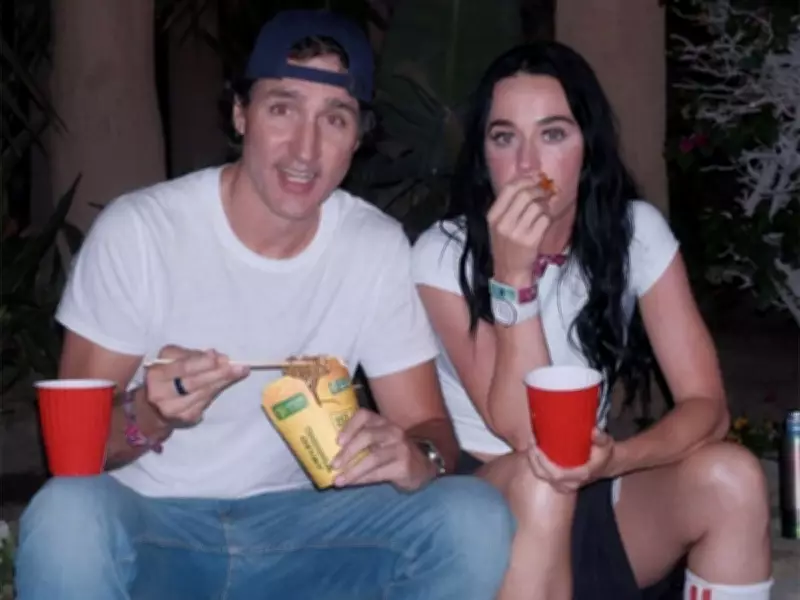
Recent events at the Coachella Valley Music and Arts Festival have highlighted Trudeau's remarkable transition. The former Canadian leader was photographed enjoying the festival alongside global pop superstar Katy Perry, creating an internet frenzy that eclipsed traditional political news coverage. Their casual interactions, including sharing ramen noodles and drinks from disposable plastic cups, became instant viral content.
This spectacle unfolded while journalists continued their routine news gathering, unaware that search engines were exploding with queries about Trudeau and Perry. The digital world had shifted its focus entirely to this unlikely pairing, demonstrating the powerful allure of celebrity culture over substantive political discourse.

Substance Versus Style
The Trudeau phenomenon represents a broader cultural shift where style frequently triumphs over substance. The former prime minister, who once promoted environmental consciousness through his climate advisor Steven Guilbeault, was photographed using single-use plastic containers at Coachella. This apparent contradiction highlights how celebrity status often exempts individuals from practicing what they preach, while ordinary citizens face different expectations.
Trudeau's fashion choices during the festival, particularly his backward Montreal Alouettes baseball cap, generated more public discussion than many policy announcements. The football team itself felt compelled to publicly endorse his headwear selection, illustrating how celebrity endorsements have become intertwined with sports marketing.
The Public's Fascination
Public reaction to Trudeau's celebrity activities reveals much about contemporary values. Social media platforms overflowed with adoring comments, including one notable post stating: "I'm so happy he's living his best life, thank you for your service and legalizing weed." This response demonstrates how recreational policy achievements can overshadow complex political legacies in public memory.
Even Trudeau's family contributes to this narrative, with his son Xavier reportedly describing his father as "the coolest dad in the world" who is "living his teenage dream." Such personal anecdotes further humanize the former politician while reinforcing his celebrity status.
The Attention Economy
Trudeau's continued relevance highlights how attention has become a valuable currency in modern society. While substantive political issues demand consideration, the public's gaze frequently shifts toward celebrity spectacles. This dynamic creates a challenging environment for serious journalism, as viral moments often dominate digital landscapes at the expense of important policy discussions.
The former prime minister's ability to maintain public fascination despite leaving office suggests a new paradigm for political figures in the digital age. Rather than fading from public view, some politicians can reinvent themselves as cultural icons, leveraging their existing recognition to remain relevant in entertainment spheres.
This transformation raises important questions about the future of political engagement and whether substantive governance can compete with celebrity spectacle in capturing public attention. As society navigates these cultural currents, the Trudeau phenomenon serves as a compelling case study in the evolving relationship between politics and popular culture.