Poly Under Duress: When Ethical Non-Monogamy Becomes Emotional Pressure
While polyamory enjoys a prominent moment in contemporary pop culture, recent headlines and public discourse have not necessarily portrayed ethical non-monogamy in a favorable light. A particularly troubling concept gaining attention is "poly under duress" (PUD), a term originating from ethical non-monogamy (ENM) communities that describes situations where individuals reluctantly agree to polyamorous arrangements primarily to preserve relationships rather than from genuine interest or enthusiastic consent.
Celebrity Stories Bring PUD to the Forefront
Two high-profile celebrity narratives have propelled this concept into mainstream conversation, with the term itself being popularized by influential sex writer Dan Savage. In October, pop singer Lily Allen released her album "West End Girl," featuring brutally revealing lyrics that appeared to reference the turbulent open marriage she reportedly shared with ex-husband David Harbour, the acclaimed "Stranger Things" actor.
In an interview with Elle UK, Allen confessed that she had to contort her own needs to accommodate the arrangement Harbour proposed. "It's not something that I think I would necessarily explore again," she told the magazine, highlighting the emotional compromise involved.

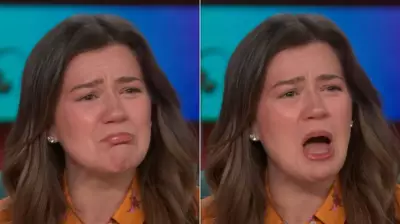
Then came memoirist Lindy West's recent publication "Adult Braces," which delves into how she reluctantly agreed to a non-monogamous marriage with her husband, musician Ahamefule Oluo. "My initial reaction was, I was devastated," West revealed to The New York Times regarding Oluo broaching the idea earlier in their relationship. "Our initial conversation was a lot of me crying and being like, 'I don't want anyone else.'"
The Complicated Dynamics of Poly Under Duress
In 2019, West discovered that Oluo was dating another woman, Roya Amirsoleymani, which forced the issue to a head. "At this point he had sort of come to the conclusion that we couldn't resolve this, which is why he went ahead and started dating this person," West explained. "Because I had been gone. I had refused to talk to him about it. I think it felt like I was losing him, but I was just determined to win."
Eventually, West met Amirsoleymani and gradually warmed to the idea of opening her marriage. Today, all three live together in what West describes as a happily settled "triad." However, many social media commentators have suggested that West might not have consented had her husband not made clear his intention to continue his relationship with Amirsoleymani.
"People read a messy story about someone's relationship and go, 'A-ha, I told you so,'" observed Leanne Yau, a U.K.-based sex and polyamory educator. "It's confirmation bias for people who already have biases against poly people. People think that we're selfish, untrustworthy cheaters who don't understand monogamy."
Personal Experiences Reveal Emotional Complexities
As forms of ethical non-monogamy become increasingly prevalent, therapists report that partners often feel pressured to enter polyamorous relationships after years of monogamous commitment. Kat Moghanian, a therapist specializing in alternative sex and sexuality based in San Francisco, California, frequently witnesses this dynamic in her practice.
"Sometimes it's based on fear," Moghanian explained. "Sometimes it's a partner's infidelity driving these decisions, or the anxiety of losing a partner."
This describes exactly what happened to Joe, who entered polyamory primarily because he feared losing his poly-curious wife and the life they had built together over 25 years. "I couldn't walk away from a 25-year marriage with kids and our dream forever home," said Joe, who requested using only his first name for privacy. "I still loved my partner, I still wanted them to be happy, so I agreed to be polyamorous, because I couldn't bring myself to end the relationship. But you can't consent when there is no choice. It felt like emotional blackmail."
Despite establishing clear boundaries about emotional connections with third parties, Joe's wife quickly broke those agreements, spending multiple nights with a new partner and traveling together without protection. The couple eventually divorced, with Joe's wife moving on with her new partner.

"However, I now fully understand that what I went through was not an ethical poly relationship," Joe reflected. "Polyamory should not be exercised like it was for me, and many people do have very healthy and happy poly relationships. They put the work in, all parties are aligned, informed, and communication is key."
Success Stories and Nuanced Perspectives
Not every poly under duress narrative ends in separation. When Dave proposed opening his marriage, he worked diligently to ensure his wife never felt cornered: establishing equal decision-making power, advocating for therapy, and even offering financial support if they decided to separate despite their similar incomes.
"I was aware of poly under duress," Dave told HuffPost, "and I worked hard to navigate a space between doing the commonly suggested thing of simply divorcing and separating when such an impasse is reached and continuing to live monogamously unhappily without even a remote possibility of my needs ever being met."
Reluctantly, his wife agreed to opening their marriage, which has surprisingly become successful despite her initial hesitation. The couple has now been happily married for 22 years, with 15 of those years in an open arrangement.
"Opening a monogamous relationship is really ending one," Dave noted, "and what's built after is a new and different relationship, with different rules and agreements and structure."
Broader Cultural Context and Queer Perspectives
Moghanian emphasizes that experiences with poly under duress vary dramatically across different relationships. "Experiences are really all over the map," she said. "I have also worked with clients experiencing polyamory under duress that stemmed from feeling pressured by ideologies or by an internal sense of obligation to embrace polyamory as a political, anti-patriarchal value, even when it did not align with their own needs or identity."
This reasoning echoes something West wrote in her book: "Being cool about polyamory felt like a growing imperative in progressive circles." Interestingly, discussions of PUD in forums like r/polyamory tend to focus predominantly on straight couples, though Yau notes it occurs in queer relationships as well, albeit less frequently.
"I think that's because there's a huge overlap between the non-monogamous community and those who are already living a non-traditional, non-heteronormative life," Yau explained. "Queer couples are much more likely to question other relationship norms, like monogamy and mononormativity."
Moving Beyond Stereotypes Toward Understanding
With thoughtful communication, Yau believes there doesn't have to be a villain when opening relationships. The poly-curious person is essentially being transparent about their relationship needs during a particular phase, though this transparency can create imbalanced power dynamics when one partner feels caught off-guard.
This complicated dynamic mirrors other challenging relationship crossroads, such as when one partner changes their mind about having children. Yau urges people to move beyond stereotyping polyamorous individuals as manipulative or determined to abandon their partners, instead advocating for listening to their actual experiences.
"Polyamorous people very openly talk about shit online, so we don't need to project," she emphasized. "Ultimately, I think we all deserve to engage in relationship styles that feel aligned with our values and make us happy."