Daily Show Correspondent Ronny Chieng Delivers Scathing Critique of RFK Jr.'s New Podcast Venture
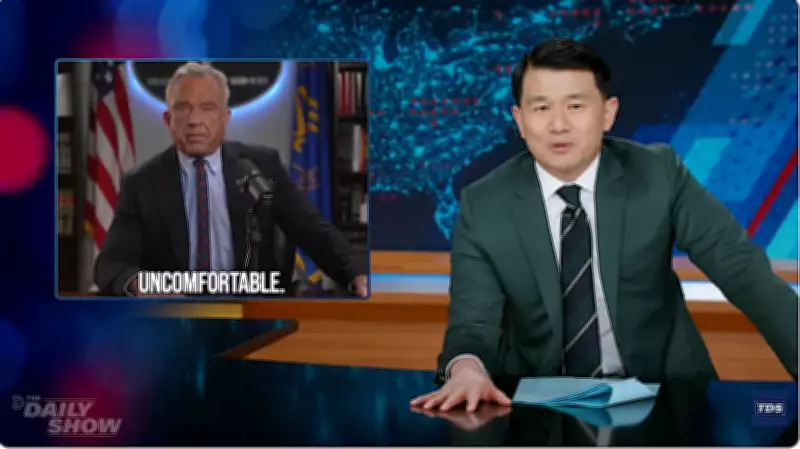
In a biting segment on Tuesday night's episode of The Daily Show, correspondent Ronny Chieng launched a pointed critique against Health and Human Services Secretary Robert F. Kennedy Jr.'s newly announced podcast. Chieng questioned the fundamental premise of a high-ranking Trump administration official dedicating time and resources to an audio-based medium while serving in a critical government role.
"I Can't Think of Anyone Less Suited to an Audio-Centric Medium"
Chieng opened his commentary with characteristic sarcasm, stating, "There's a Trump administration official starting a podcast, and if you're hoping it's one of the ones with a voice that doesn't sound like shit, think again." The correspondent then played the trailer for Kennedy's podcast, in which the secretary declared his intention to focus on "telling the truth, especially when it's uncomfortable."
"I'm uncomfortable already," Chieng responded immediately. He elaborated further with a series of sharp observations about the podcast's potential appeal, suggesting, "I can't think of anyone less suited to an audio-centric medium. Although, actually, maybe that's how they'll make money. I mean DraftKings is gonna pay to not have ads on it. I can't wait for his first guest, the jackhammer outside your apartment building at 6 a.m."

Questioning Government Priorities and Responsibilities
The core of Chieng's critique centered on the apparent contradiction between Kennedy's governmental duties and his podcast ambitions. In the trailer, Kennedy promised his podcast would "follow the evidence wherever it leads" and "name the names of the forces that obstruct the paths to public health."
Chieng challenged this approach directly, asking why a government official would use a podcast platform to discuss problems that fall squarely within his own department's responsibility to solve. "You're gonna talk about the government's problems on a podcast," Chieng said incredulously. "Maybe after you do that, you could, I don't know, maybe send an email to yourself to fucking fix it, cause you're the government now, remember? That's your job. That's your job."
The correspondent concluded with a rhetorical question that cut to the heart of his criticism: "What's episode two about? Why are government employees starting podcasts instead of working?"
Broader Implications for Government Communication
This segment highlights ongoing tensions between traditional governmental communication channels and newer media formats. While podcasts have become increasingly popular platforms for public figures to share perspectives, Chieng's critique raises valid questions about whether such ventures represent productive use of time for officials with direct policy-making authority.
The exchange underscores broader concerns about how government officials balance public engagement with their core administrative responsibilities. As Chieng's commentary suggests, there may be legitimate questions about whether podcast creation represents an appropriate allocation of resources for officials whose primary mandate involves implementing solutions rather than merely discussing problems through alternative media channels.