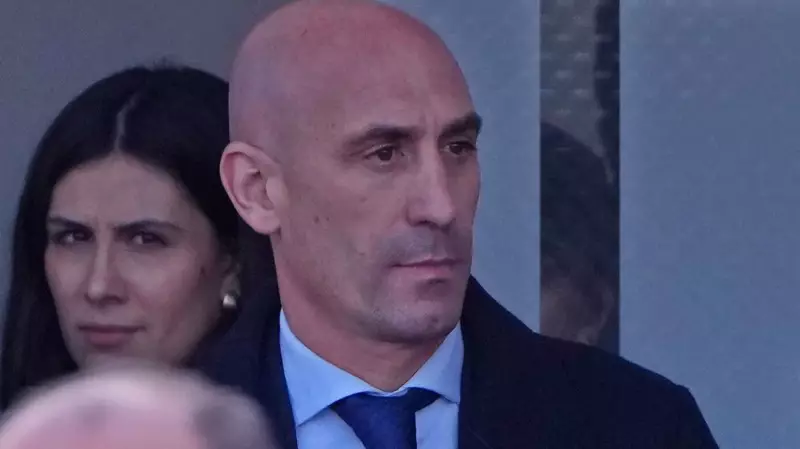
In a dramatic and personal turn of events, former Spanish Football Association (FA) president Luis Rubiales was the target of an egg-throwing attack during a public event in Madrid. The assailant was revealed to be his own uncle, adding a layer of familial conflict to the ongoing controversy surrounding the disgraced football official.
A Shocking Confrontation
The incident occurred on Thursday, November 14, while the 48-year-old Rubiales was presenting his new book, titled “Matar a Rubiales” (Killing Rubiales). The venue was the Espacio Eventize media room in the Spanish capital. According to reports, a man in the audience suddenly began hurling eggs at the former football chief.
Rubiales later identified the attacker in an interview with Radio MARCA, stating, “It was my uncle, my blood uncle, who is a troublemaker and always has been.” He described the moment of panic, revealing, “He came in with some eggs and threw them at me, but I didn’t know what he had in his hands, and when I saw him burst in, I thought he was carrying a gun.”

The Legal Backdrop: A Conviction for Sexual Assault
This public humiliation is the latest chapter in a saga that began in 2023. In February of this year, Spain's High Court found Rubiales guilty of sexual assault. The conviction was for kissing star forward Jenni Hermoso on the lips without her consent during the medal ceremony following Spain's victory at the 2023 Women's World Cup in Sydney.
The court's ruling resulted in a fine of more than 10,000 euros (approximately $11,662 USD). In addition to the Spanish legal penalty, the world soccer governing body, FIFA, handed Rubiales a three-year ban from all football-related activities.
National Repercussions and a Cultural Shift
The unsolicited kiss and the subsequent legal battle ignited a firestorm of criticism across Spain and beyond. The incident sparked a intense nationwide furore about sexism deeply embedded in Spanish society and its sporting institutions.
More significantly, it acted as a powerful catalyst, fuelling momentum for the “Me Too” movement within the country. The case became a symbol of the fight against the abuse of power and the lack of respect for women's autonomy, particularly in the world of professional sports.
The book launch, intended to present Rubiales's side of the story, was instead overshadowed by a deeply personal attack, underscoring the profound and ongoing divisions his actions have caused.