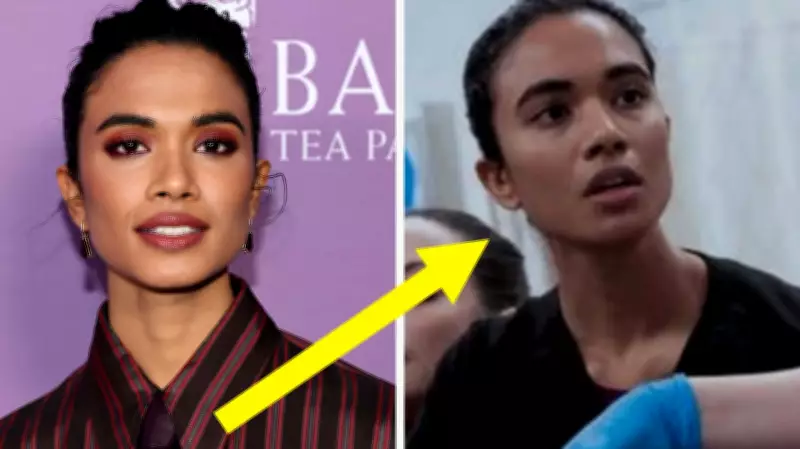
Supriya Ganesh Reflects on Gender Dysphoria and Queer Identity in Revealing Essay
With her role as the beloved Dr. Samira Mohan on the hit medical drama The Pitt, Supriya Ganesh has captured widespread attention recently. The news of her departure from the show at the end of Season 2 sparked significant outcry and discourse across social media platforms. However, in a deeply personal essay for Vulture, Ganesh shifts focus to a transformative period in her life, exploring themes of gender dysphoria, cultural identity, and self-discovery.
A Journey from India to America
Ganesh moved from India to the United States at the age of 18 to attend Columbia University, a transition that brought unexpected challenges. She writes about experiencing gender dysphoria for the first time, highlighted by a specific incident at a New York bar where someone directly questioned whether she was a man or a woman. This moment was particularly poignant, as Ganesh noted that the man was white, and she was the only non-white woman at the table, leading her to scrutinize her peers for clues about what she might have done wrong.
Growing up in India, Ganesh had always identified as a girl, surrounded by a culture where gender expressions were more fluid. She describes Sikh women who did not tame their body hair, men holding hands platonically with male friends, and children cross-dressing for play. Despite this upbringing, she knew she was queer from a young age and hoped college would allow her to explore that identity freely. Instead, she found herself pressured to conform to Western, white beauty standards.

Struggles with Conformity and Self-Image
During her college years, Ganesh felt increasingly disconnected from her body, punishing it for not meeting societal ideals. She engaged in practices such as chemically straightening her curls, contemplating a nose job, and adhering to a strict waxing schedule, all in an effort to avoid being perceived as the ungroomed, hairy brown girl. Yet, she observed that no matter how she presented, she was consistently dehumanized in ways that white women were not. When she performed femininity appropriately, she was exoticized; when she skipped hair removal to save money for textbooks, she was labeled repulsive and mannish.
Finding Community and Empowerment
In her sophomore year, Ganesh discovered a supportive queer community that encouraged gender fluidity and nonconformity. Through women's studies courses and readings from Black queer authors like Audre Lorde, she gained a new sense of empowerment. This environment allowed her to openly discuss gender dysphoria, gender performance, and its limitations. She became more relaxed with her body hair, embraced her natural texture, swapped barre classes for weight lifting, and experimented with menswear, fostering a healthier relationship with her identity.
Embracing She/They Pronouns
In the essay, Ganesh explains why she feels most comfortable using she/they pronouns, describing it as the most accurate way to reflect her experience as a queer South Asian woman. She notes that this choice allows her to signal her queerness, especially in moments when she might present as more femme or straight to others in the queer community. Additionally, she views it as a defiant rejection of the boxes she had been placed in for years, calling it a delicious 'fuck you' to societal constraints.
Ganesh's essay offers a raw and insightful look into her personal journey, highlighting the intersections of race, gender, and culture. Readers can explore her full essay on Vulture, and catch her final appearance on The Pitt in the season finale airing on Thursday, April 16.