In a fiery exchange that has reignited debates over artistic freedom and racial sensitivity in cinema, acclaimed director Quentin Tarantino has publicly responded to actress Rosanna Arquette's condemnation of his use of the N-word in films. The controversy stems from an interview where Arquette, who had a minor role in Tarantino's 1994 classic Pulp Fiction, expressed her disdain for the racial slur's prevalence in his work.
Arquette's Critique and Tarantino's Retort
During a conversation with the U.K.'s Sunday Times, Arquette praised Pulp Fiction as "a great film on a lot of levels" but took issue with Tarantino's liberal employment of the N-word. She stated, "Personally I am over the use of the N-word — I hate it. I cannot stand that he has been given a hall pass. It’s not art, it’s just racist and creepy."
Tarantino, known for his unapologetic style, fired back through a statement distributed by his publicists to major entertainment outlets including Entertainment Weekly and Variety. In a letter directly addressed to Arquette, he accused her of displaying "a decided lack of class" and suggested her criticism was motivated by a desire for publicity. "I hope the publicity you’re getting from 132 different media outlets writing your name and printing your picture was worth disrespecting me and a film I remember quite clearly you were thrilled to be a part of," he wrote, adding, "Do you feel this way now? Very possibly."

Historical Context of Racism Allegations
This is not the first time Tarantino has faced scrutiny over racial elements in his films. According to industry reports, the N-word appears approximately 20 times in Pulp Fiction, over 30 times in 1997's Jackie Brown, and more than 100 times in 2012's Django Unchained. Fellow filmmaker Spike Lee has been a vocal critic, stating in 1997, "I’m not against the word, and I use it, but not excessively. And some people speak that way. But, Quentin is infatuated with that word. What does he want to be made — an honorary Black man?"
Director Lee Daniels also questioned Tarantino's approach, particularly after the filmmaker dismissed critics by suggesting they could "watch something else" in a 2022 interview. Daniels remarked, "That’s not the right answer."
Broader Controversies and Defenses
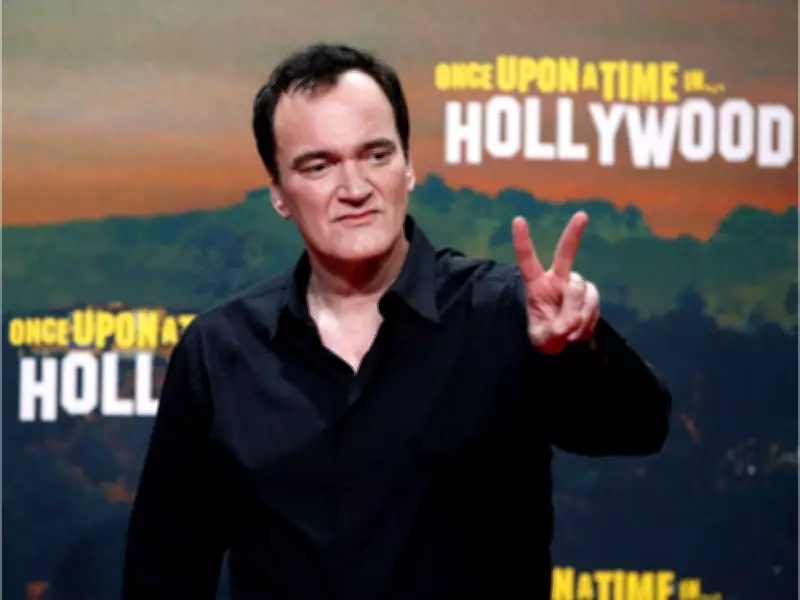
Tarantino's portrayal of Bruce Lee in 2019's Once Upon a Time in Hollywood further fueled accusations of insensitivity. In the film, Lee is depicted as a braggart who loses a fight to stuntman Cliff Booth, played by Brad Pitt. Shannon Lee, Bruce Lee's daughter, called the characterization "disrespectful" and "a mockery" of her father's legacy, while basketball legend Kareem Abdul-Jabbar labeled it "sloppy" and "racist."
Defending his creative choices, Tarantino argued on Joe Rogan's podcast in 2021 that Bruce Lee "had nothing but disrespect for stuntmen" and told critics to "go suck a d—." More recently, in December, Tarantino sparked additional controversy by lashing out at actors Paul Dano, Owen Wilson, and Matthew Lillard during a podcast appearance, with Lillard later responding that the comments "hurt."
As this latest feud unfolds, it highlights ongoing tensions in Hollywood between artistic expression and social responsibility, with Tarantino remaining a polarizing figure whose work continues to provoke intense discussion and debate.