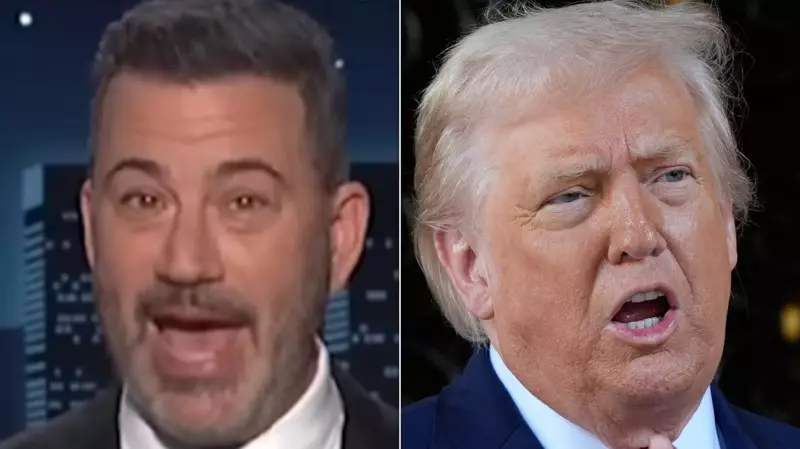
Late-night host Jimmy Kimmel expressed sheer bewilderment this week after former President Donald Trump repeated a demonstrably false claim about his electoral performance in a key battleground state.
Trump's Repeated False Claim
During a recent public appearance, Donald Trump asserted that he had won the state of Minnesota in the last three presidential cycles. "I won Minnesota three times and I didn’t get credit for it," Trump declared, referring to the 2016, 2020, and 2024 elections. He elaborated on his belief, stating, "I did so well in that state, every time, the people, they were crying, every time, after."
This claim is categorically untrue. Electoral records show that Trump lost Minnesota in all three elections he referenced. The state has a long history of supporting Democratic candidates at the presidential level, having not voted for a Republican nominee for over fifty years.

Kimmel's Baffled Reaction
Reviewing the clip on his ABC talk show, Jimmy Kimmel was left utterly stunned. "What is he talking about?" Kimmel asked his audience, his confusion palpable. The comedian then posed a pointed question about media accountability regarding such statements.
"Is anybody going to ask that question? 'Mr. President, what are you talking about?'" Kimmel suggested. "That should be the only question anyone ever asks him." His reaction highlighted a recurring theme in political commentary: the challenge of addressing repeated falsehoods that contradict established facts.
The Facts Versus The Narrative
The incident underscores a significant disconnect between claimed electoral success and verified results. Despite Trump's insistence, Minnesota's voting history is clear:
- In 2016, Hillary Clinton won the state.
- In 2020, Joe Biden secured Minnesota's electoral votes.
- In 2024, the state again supported the Democratic candidate.
Kimmel's monologue, which aired on a Monday night, served as both comedic fodder and a moment of political analysis. His call for direct questioning reflects a broader frustration with the normalization of claims that are easily disproven by public data. This episode is a stark reminder of the ongoing debate over truth and misinformation in modern political discourse.