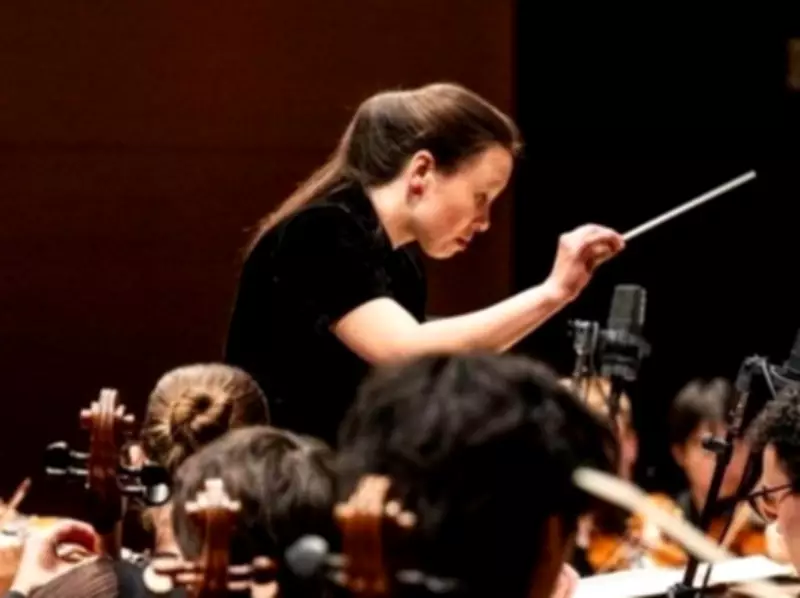
It has become a cherished tradition for the Calgary Philharmonic Orchestra and the Edmonton Symphony Orchestra to exchange visits regularly. Beyond fostering civic goodwill, these collaborations allow both ensembles to showcase their full sonic potential, with 120 musicians playing in harmonious unity. The recent concert, aptly titled Alberta in Harmony, was a testament to this spirit.
A Memorable Collaboration
The last time these two orchestras performed together, they delivered a memorable rendition of Mahler's Symphony No. 3. This time, the joint program featured Gustav Holst's The Planets, paired with John Luther Adams's Become Ocean. The combination offered a journey from the vastness of space to the depths of the sea.
Understanding John Luther Adams
John Luther Adams, often confused with composer John Adams, has carved his own niche in the music world. Both are Pulitzer Prize winners and share a minimalist approach, but their styles diverge significantly. Adams, an environmentalist and self-described cultural refugee, now resides in Alice Springs, Australia, after years in Fairbanks, Alaska. His music is deeply connected to nature, with scores that serve as metaphors for grand environmental concepts.

Become Ocean addresses climate change and rising sea levels, evoking the idea that much of the inhabited world may eventually be submerged. This single-movement, 40-minute piece is a sonic kaleidoscope representing the ocean's vastness rather than a narrative. It captures the terrifying expanse of the sea, its constant yet changing nature, and the interplay of calm and storm. Musical patterns repeat with subtle variations, building to overwhelming volumes achievable only with a large ensemble.
Performance Highlights
Technically, Become Ocean is less demanding than a Tchaikovsky symphony, with straightforward rhythms. It invites listeners to immerse themselves in complex, evolving soundscapes without a defined destination. Guest conductor Naomi Woo led the orchestra adeptly, pacing the long crescendos and highlighting shifts in orchestral color. The grand moments were truly majestic, while softer passages sparkled with delicacy. Some listeners might find the piece slightly overlong, but its immersive quality is undeniable.