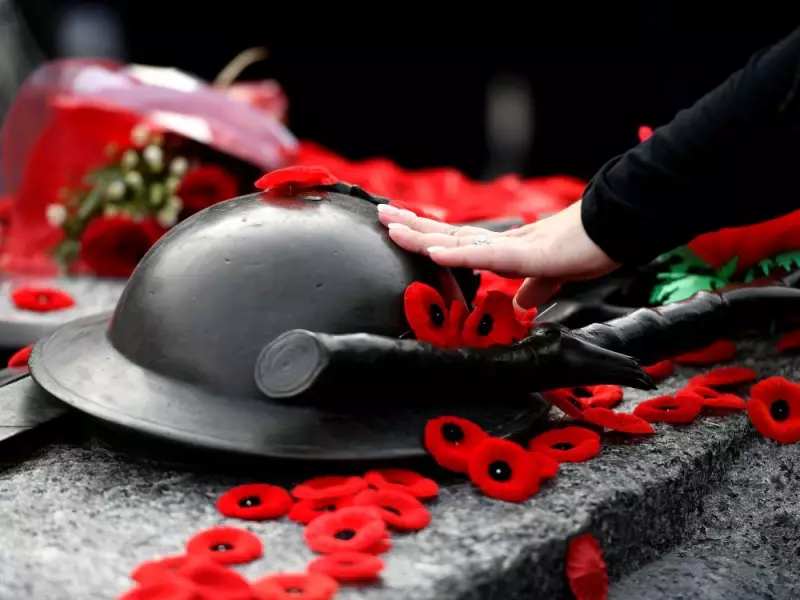
Father Raymond J. de Souza has issued a poignant reminder about the sacred duty Canada holds towards its Tomb of the Unknown Soldier. He observes that when the tomb at the National War Memorial in Ottawa is left unattended, it is as if the soldier within is both gone and forgotten, a profound failure in our national act of remembrance.
A Modern Memorial with Ancient Roots
Many Canadians might be surprised to learn that the Tomb of the Unknown Soldier is a relatively recent addition to our national landscape. The remains of an unknown soldier from the First World War were solemnly interred at the National War Memorial on May 28, 2000, making the site a ceremonial highlight of the millennium year in the nation's capital.
The repatriation process was a significant national event. The remains, retrieved from a cemetery near Vimy Ridge in France, were first placed to lie in state within the rotunda of Parliament. From there, a horse-drawn carriage carried the casket to the cenotaph for re-interment with full military honours. The site remains a focal point for national reflection, as evidenced when King Charles III laid a wreath there during his recent visit.

A Tradition Forged in the Aftermath of the Great War
The practice of honouring war dead is ancient, but the specific tradition of a tomb for an unknown soldier is a more modern development, born from the unimaginable scale of loss during the First World War. The concept emerged as a way to collectively mourn the countless individuals whose fates remained unknown.
Canada's own Vimy Memorial in France stands as a stark testament to this, bearing the names of 11,285 soldiers who died in France and have no known grave. This figure is a fraction of the more than 66,000 Canadians who lost their lives in the conflict.
The international precedent was set on November 11, 1920, the second anniversary of the armistice. On that day, the Unknown Warrior was buried at Westminster Abbey in London, with King George V in attendance. A sacred custom dictates that no one walks over the tomb, requiring even grand royal processions for coronations and weddings to divert around it.
That same day, France established the Tombe du Soldat Inconnu at the Arc de Triomphe in Paris. Other nations quickly followed; Rome installed its tomb the following year in 1921 within the massive Vittoriano monument.
A Symbolic Link to Enduring Traditions of Honour
Father de Souza draws a powerful parallel between the military tradition of the unknown soldier and ancient Christian practices. He notes that the concept of honouring unknown saints, referred to in the Bible as a "great cloud of witnesses" or a "great multitude which no man could number," provides a spiritual framework for understanding the tomb's significance.
The feast of All Saints on November 1, which honours all saints known and unknown, occurs shortly before Remembrance Day. In this context, the Unknown Soldier stands as a powerful analogue for all the unknown saints, representing the immense and countless sacrifices made for the nation.
The central argument remains clear: for this symbol to hold its power, it must be treated with perpetual respect and vigilance. The sight of an unattended tomb undermines the very promise of remembrance it is meant to embody.