Four Decades of Unanswered Questions
In a poignant ceremony along the Guali River in Honda, Colombia, families gathered this week to remember loved ones who vanished forty years ago during one of the deadliest volcanic disasters in modern history. The event took place on November 12, 2025, marking the eve of the 40th anniversary of the catastrophic Nevado del Ruiz eruption that claimed approximately 25,000 lives.
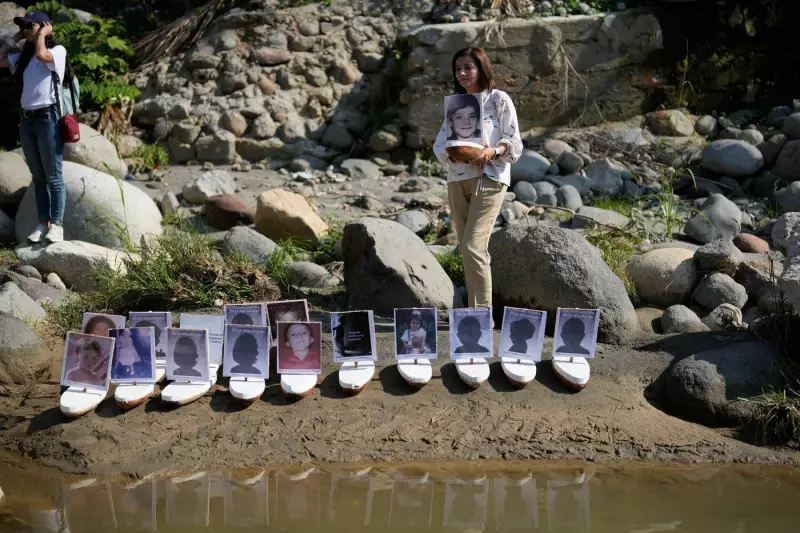
Martha Lucia Lopez stood among the mourners, holding a small boat containing a photograph of her son Sergio Melendro Lopez, who disappeared when the volcano erupted on November 13, 1985. Like dozens of other grieving parents and relatives, she released the vessel into the river as part of a symbolic memorial for those whose bodies were never recovered.
The Tragedy That Shook a Nation
The Nevado del Ruiz volcano eruption remains Colombia's worst natural disaster. When the volcano exploded, it triggered massive lahars - violent mudflows of volcanic debris and water - that swept through the town of Armero and surrounding areas, burying entire communities under meters of mud and rock.

The disaster unfolded with terrifying speed, catching many residents unaware despite some warning signs in the preceding months. The lahars traveled at speeds up to 30 miles per hour, destroying everything in their path and making escape nearly impossible for those in low-lying areas.
The official death toll stands at approximately 25,000 people, though some estimates suggest the actual number may be higher. Among the victims were hundreds of children whose bodies were never identified or recovered, leaving families with decades of uncertainty and unresolved grief.
A Continuing Search for Closure
For survivors like Martha Lucia Lopez, the passage of forty years has done little to diminish the pain of not knowing what happened to their loved ones. The river ceremony represents both a memorial and a continuing search for answers.
The small boats carrying photographs served as symbolic representations of the missing children, allowing families to perform a ritual of remembrance while maintaining hope that some evidence might still surface. The Guali River, which runs through the affected region, became a natural conduit for both the original disaster and the current expressions of grief.
Similar memorial events have taken place annually since the tragedy, though the 40th anniversary carries particular significance for the aging parents who continue their quest for closure. Many participants expressed concern that as they grow older, the memory of their missing children might fade from public consciousness.
The Nevado del Ruiz volcano remains active and monitored, with the 1985 disaster having transformed Colombia's approach to volcanic risk assessment and emergency preparedness. However, for the families of the missing, the geological reality continues to be overshadowed by personal tragedy that has stretched across two generations.