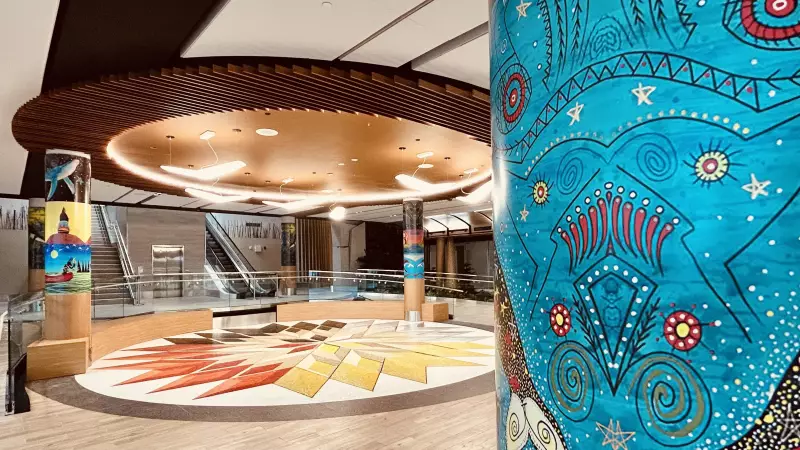
Halifax's Stanfield International Airport has officially opened a newly renovated arrivals area, designed to welcome visitors to Canada while providing a profound celebration of Indigenous culture. The transformed space, which launched on January 16, 2026, aims to offer travellers their first meaningful connection to the land and its original peoples.
A Gateway Infused with Heritage
The project, often referred to as the new connections area, specifically honours the Mi'kmaq, the Indigenous people whose traditional territory encompasses Nova Scotia. Airport officials stated the redesign moves beyond mere aesthetics, intending to create an immediate and respectful introduction to the region's deep-rooted history. The space incorporates artistic elements, storytelling, and design principles that reflect Mi'kmaq worldview and craftsmanship.
Details of the Launch and Vision
The launch was confirmed in an announcement made on the afternoon of Friday, January 16. While specific architectural and artistic details were not fully disclosed in the initial report, the core mission is clear: to transform a functional airport zone into a cultural gateway. This initiative represents a significant step in embedding Indigenous recognition and reconciliation into a major federal transportation infrastructure.

Significance for Travellers and Community
For the thousands of international and domestic passengers passing through annually, the renovated area provides an educational and cultural experience from the moment they land. For the local Mi'kmaq community, it stands as a high-profile acknowledgment of their enduring presence and contributions. The airport's move aligns with broader national efforts to highlight Indigenous cultures in public spaces and institutions.
The renovation at Stanfield International is more than an upgrade; it is a statement. It redefines the arrival experience in Atlantic Canada, ensuring that a journey's beginning is marked by an awareness of the land's original stewards and a celebration of living Mi'kmaq culture.